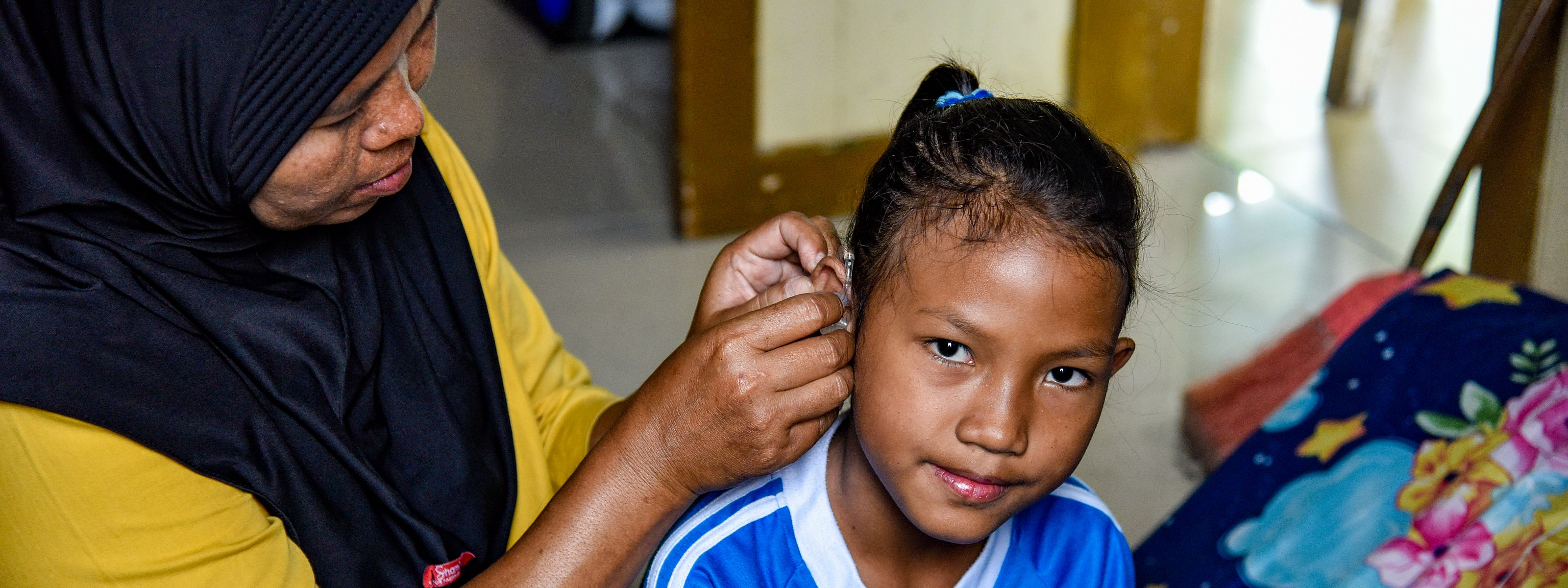
Country engagement
Enabling access to assistive technology through local leadership.
©UNICEF
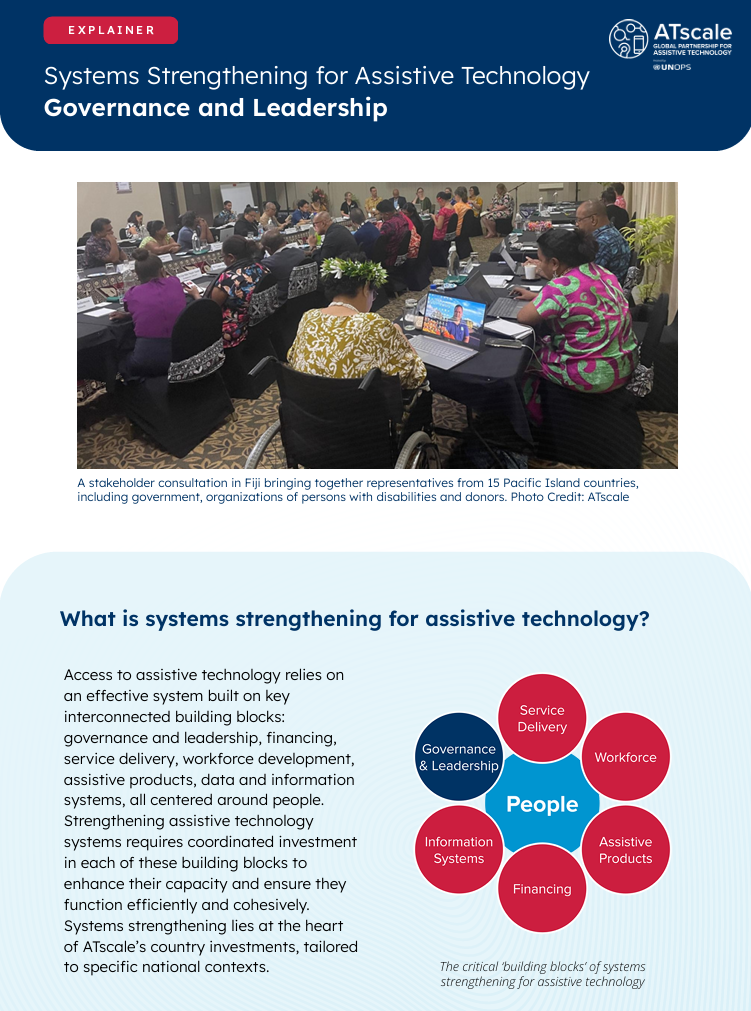
ATscale supports country-led action to close the gap between demand and supply for assistive technology and the systems needed to deliver it.
We invest in national plans that are government-led and locally run, with a focus on building stronger, more inclusive assistive technology systems. These plans promote cross-sector coordination and foster collaboration among ministries, service providers, civil society and organizations of persons with disabilities.
Our goal is to create enabling environments – with the right policies, political leadership and sustainable financing in place – so everyone who needs assistive technology can access it.
ATscale’s country engagement approach promotes:
 | Government ownership and leadership |
 | Multi-sectoral coordination |
 | Inclusive stakeholder partnerships |
 | Scalable, system-strengthening solutions. |
Together, we work to close the gap between demand and supply – ensuring everyone who needs assistive technology can access it.
World map of ATscale supported programmes to date
How we invest in countries
In 2024, ATscale and its trusted partners supported a range of country-level programmes in 22 countries, including three low-income, 12 lower-middle-income, and seven upper-middle-income countries. These programmes fall into two categories:
Foundational support
Short-term investment (12–24 months) for countries in earlier stages of AT programme development.
Foundational support focuses on:
 | Raising awareness |
 | Securing political buy-in |
 | Building policies foundations |
 | Strengthening leadership capacity. |
Countries currently receiving or having received foundational support include:
Bangladesh | Democratic Republic of the Congo | El Salvador | Guatemala | Honduras | Indonesia | Lesotho | Mozambique | Nepal | Peru | United Republic of Tanzania | Zimbabwe
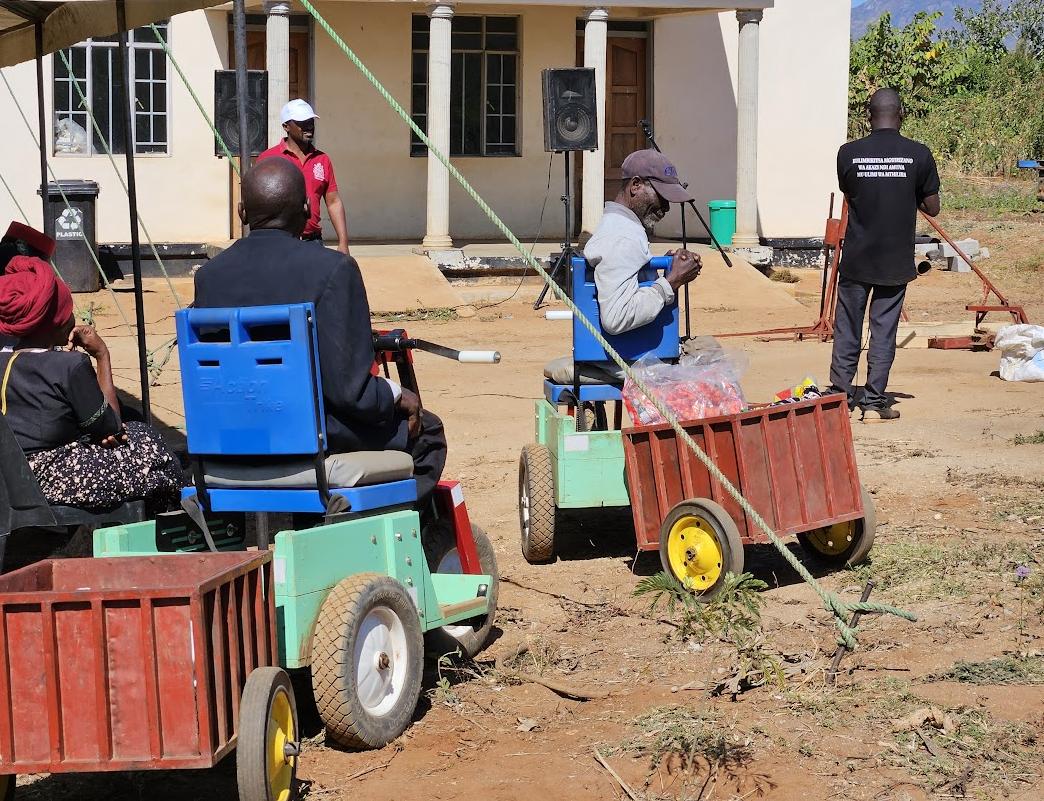
Farmers with disabilities in Machinga district showcasing carts/trolleys produced from AgriLab with support from the IFAD-funded Programme for Rural Irrigation Development (PRIDE) in collaboration with SPARK Project . Photo credit: ©Procasur
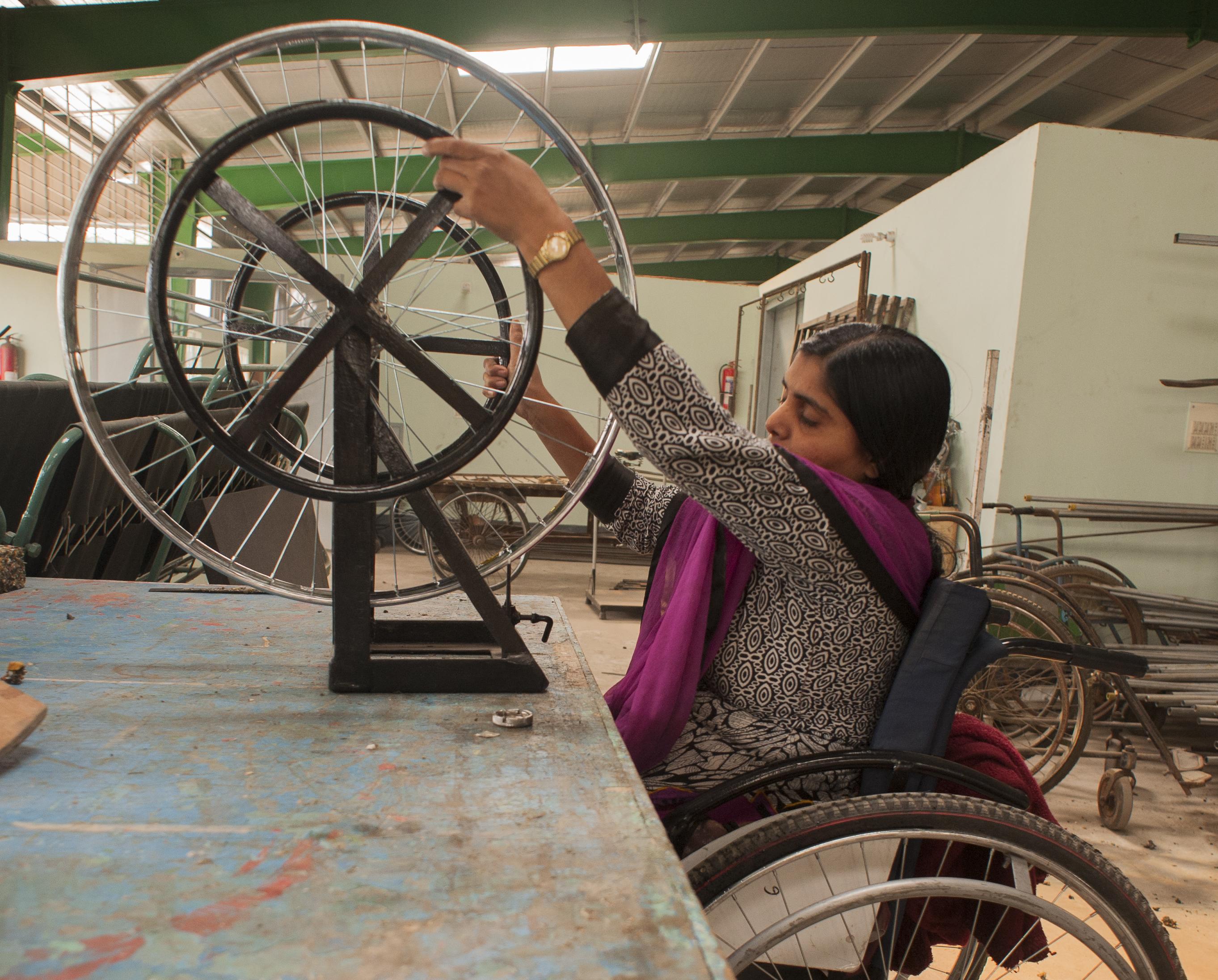
A woman using assistive technology to access work at a factory. Photo credit: ©David Constantine
Scale-up support
Long-term investment (minimum three years) - Scale-up support helps countries expand access to assistive technology and strengthen systems for lasting impact.
Scale-up support prioritises countries that:
 | Understand their needs and system gaps |
 | Have clear plans for assistive technology |

| Show strong government commitment. |
Countries currently receiving or having received scale-up support include:
Azerbaijan | Cambodia | Federated States of Micronesia | Fiji | Georgia | Kenya | Kiribati | Rwanda | Samoa | Senegal | Solomon Islands | Tajikistan | Tonga | Vanuatu
Humanitarian support
ATscale works to raise awareness and promote the systematic inclusion of assistive technology in broader humanitarian responses, including through the pre-positioning of essential assistive products. At the request of partners and countries, support focuses on urgent and specific needs – such as the provision of these products in emergency settings – to help ensure immediate access, and address health and protection risks for vulnerable individuals during crises.
Watch this short film ATscale and Humanity & Inclusion (HI), highlighting the life-saving impact of assistive technology in humanitarian crises. Also available in French, Spanish and Arabic and audio descriptions on our YouTube channel.
The countries that have received humanitarian support so far include:
Myanmar | Palestine | Ukraine
| Country | Engagement Support | Income Classification | Total population | GNI Per Capital (US$) | AT Unmet Need | Functional domains | Action |
|---|---|---|---|---|---|---|---|
| Indonesia | Foundational Support | Upper Middle | 281.20 Million | 4810.00 | 64.40% | Cross-cutting | Read More |
| Kenya | Scale-up | Lower Middle | 55.30 Million | 2115.00 | 81.60% | Mobility, Vision | Read More |
| Kiribati | Scale-up | Low Income | 0.10 Million | 3740.00 | Cross-cutting | Read More | |
| Lesotho | Foundational Support | Lower Middle | 2.30 Million | 1250.00 | Cross-cutting | Read More | |
| Federated States of Micronesia | Scale-up | Lower Middle | 0.10 Million | 4250.00 | Cross-cutting | Read More | |
| Mozambique | Foundational Support | Low Income | 33.60 Million | 540.00 | Cross-cutting | Read More | |
| Myanmar | Humanitarian | Lower Middle | 54.50 Million | 1220.00 | 72.30% | Mobility, Self-care | Read More |
| Nepal | Foundational Support | Lower Middle | 26.70 Million | 1430.00 | 66.80% | Cross-cutting | Read More |
| Palestine - Gaza | Humanitarian | Lower Middle | 5.20 Million | Mobility | Read More |