The Partnership
©ATscale
Our partnership approach
ATscale works with a diverse range of partners to overcome barriers to assistive technology access. By combining financing, technical expertise, lived experience and advocacy, we aim to make a greater impact. Our collaborations with governments, United Nations agencies, organizations of persons with disabilities, NGOs and the private sector are crucial for mobilizing resources and influencing policy.
 Effective representation of assistive technology users
Our strategy prioritizes a rights-based approach, ensuring assistive technology users shape access to technology. They participate in every stage, from planning to evaluation, primarily through organizations of persons with disabilities (OPDs). ATscale is committed to increasing funding for OPDs and building a global assistive technology user network to gather diverse perspectives.
 Advocacy and resource mobilization
Effective advocacy and resource mobilization are shared responsibilities across all ATscale partners. The Board leads high-level advocacy, while donors provide essential funding and expand networks. Civil society organizations, including OPDs, contribute to campaigns and awareness-raising efforts.
 Strategic input, technical advice and collaboration
Given the complex nature of assistive technology needs, ATscale greatly benefits from the expertise of its partners. Partners provide strategic input and technical advice that shape our priorities and strengthen implementation. This includes professional associations, academic institutions and international NGOs, as well as WHO, UNICEF and the private sector.
 Implementation
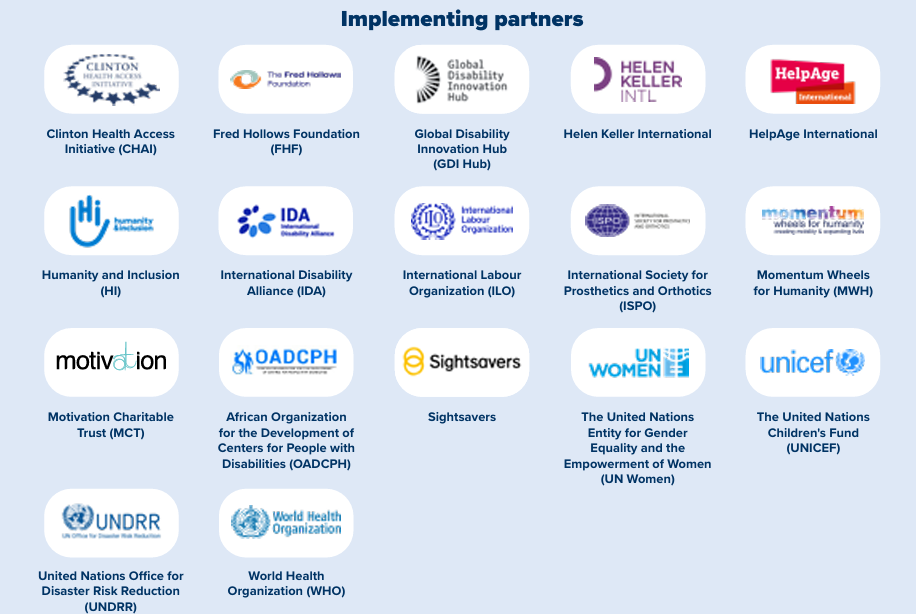
Most ATscale activities are carried out through partner organizations selected through competitive processes. These implementing partners include NGOs, social enterprises, and sometimes United Nations agencies like UNICEF and WHO. We apply strict safeguards, including conflict-of-interest policies, to ensure transparency and accountability in all implementation arrangements.
 Monitoring, evaluation and learning
Monitoring, evaluation and learning (MEL) are fundamental to ATscale's accountability and its role in building global knowledge on assistive technology. We collaborate with research institutions and technical agencies like WHO to generate evidence and strengthen data systems. Our learning agenda aims to create public goods and share knowledge across partners, feeding evidence back into programme design.
Key partners
|