Why assistive technology matters for universal health coverage
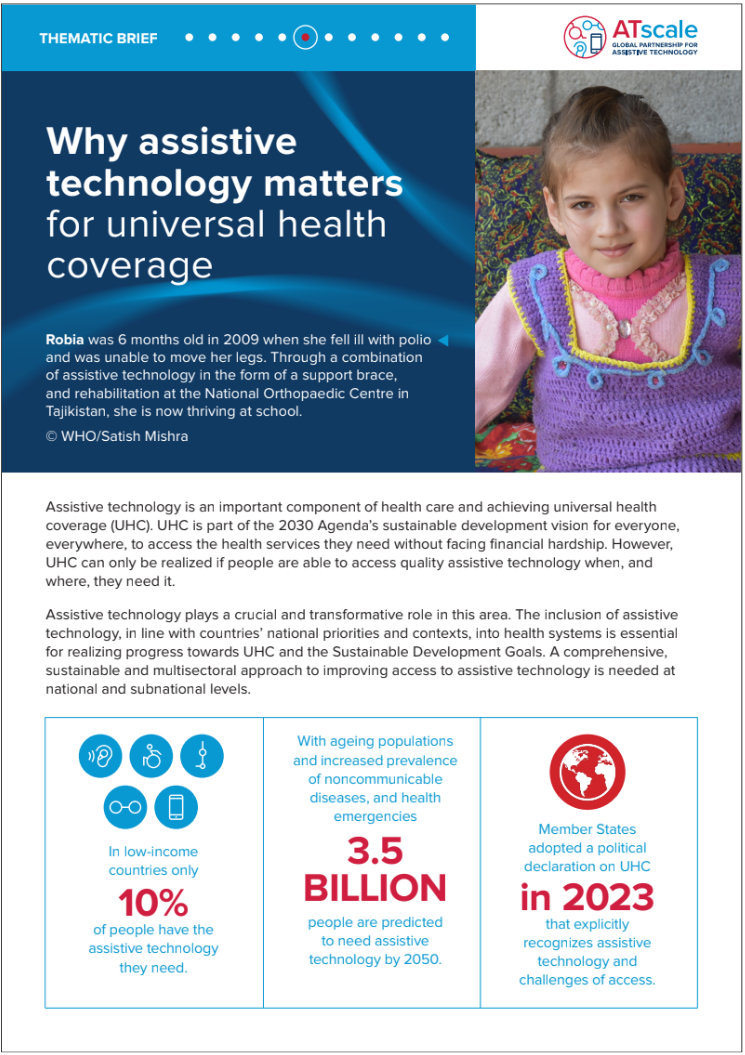
Assistive technology is an important component of healthcare and achieving universal health coverage (UHC). UHC is part of the 2030 Agenda’s sustainable development vision for everyone, everywhere, to access the health services they need without facing financial hardship. However, UHC can only be realized if people are able to access quality assistive technology when, and where, they need it.
Assistive technology plays a crucial and transformative role in this area. The inclusion of assistive technology, in line with countries’ national priorities and contexts, into health systems is essential for realizing progress towards UHC and the Sustainable Development Goals. A comprehensive, sustainable and multisectoral approach to improving access to assistive technology is needed at national and subnational levels.
A series of thematic briefs explain the cross-cutting nature of assistive technology and why assistive technology matters for various sectors.
The aim of the series is to advocate the inclusion of assistive technology considerations in cross-sectoral strategies and operational plans at national level, and in global policies and guidance; to encourage other sectors to consider the significant role assistive technology plays in helping them achieve their own goals, especially for inclusion and equity, and to make a clear link with the relevant Sustainable Development Goals (SDGs).
We expect them to be read by donors, partners, policy makers, AT experts, advocates and practitioners, and all those interested in equity, universality and achieving the SDGs
Click on each image below to download the briefs in English, French, Spanish, and accessible versions to discover why assistive technology matters.