Why assistive technology matters for palliative care
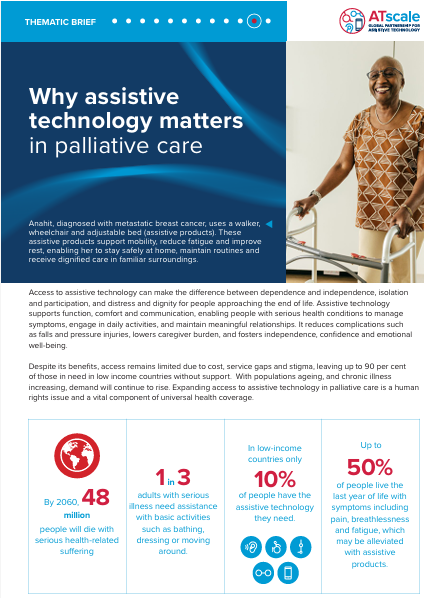
Access to assistive technology can make the difference between dependence and independence, isolation and participation, and distress and dignity for people approaching the end of life. Assistive technology supports function, comfort and communication, enabling people with serious health conditions to manage symptoms, engage in daily activities, and maintain meaningful relationships. It reduces complications such as falls and pressure injuries, lowers caregiver burden, and fosters independence, confidence and emotional well-being.
Despite its benefits, access remains limited due to cost, service gaps and stigma, leaving up to 90 per cent of those in need in low income countries without support. With populations ageing, and chronic illness increasing, demand will continue to rise. Expanding access to assistive technology in palliative care is a human rights issue and a vital component of universal health coverage.
A series of thematic briefs explain the cross-cutting nature of assistive technology and why assistive technology matters for various sectors.
The aim of the series is to advocate the inclusion of assistive technology considerations in cross-sectoral strategies and operational plans at national level, and in global policies and guidance; to encourage other sectors to consider the significant role assistive technology plays in helping them achieve their own goals, especially for inclusion and equity, and to make a clear link with the relevant Sustainable Development Goals (SDGs).
We expect them to be read by donors, partners, policy makers, AT experts, advocates and practitioners, and all those interested in equity, universality and achieving the SDGs
Click on each image below to download the briefs in English, French, Spanish, and accessible versions to discover why assistive technology matters.