Why assistive technology matters for humanitarian contexts
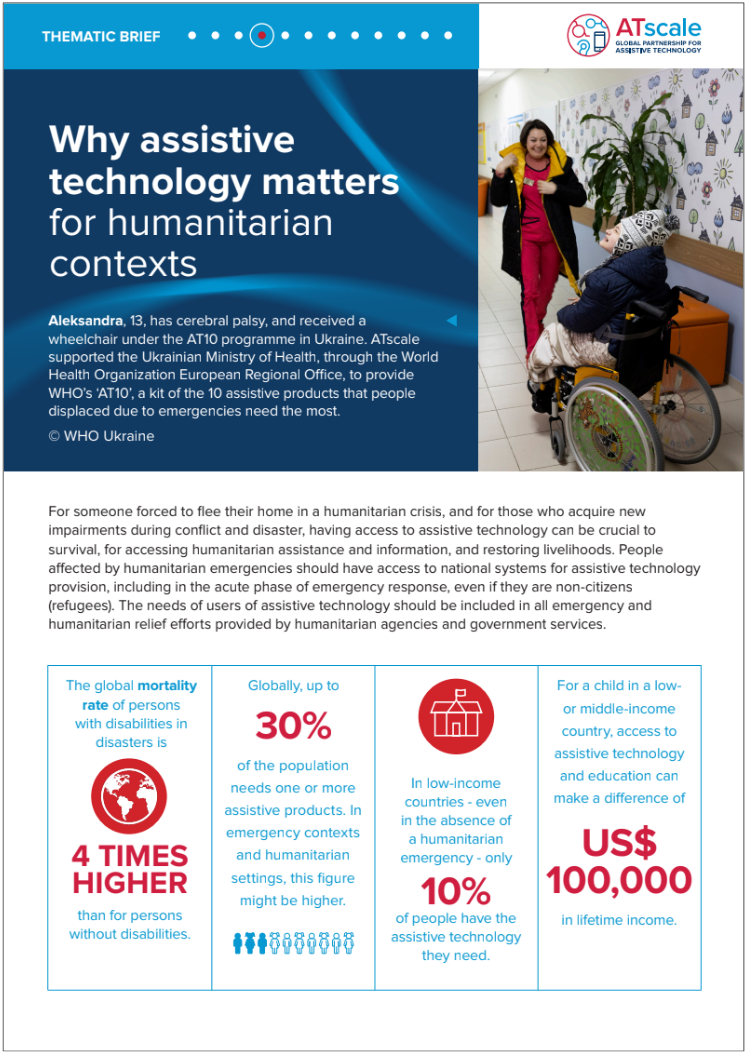
People affected by humanitarian emergencies should have access to national systems for assistive technology provision, including in the acute phase of emergency response, even if they are non‑citizens (refugees).
The needs of users of assistive technology should be included in all emergency and humanitarian relief efforts provided by humanitarian agencies and government services.
A series of thematic briefs explain the cross-cutting nature of assistive technology and why assistive technology matters for various sectors.
The aim of the series is to advocate the inclusion of assistive technology considerations in cross-sectoral strategies and operational plans at national level, and in global policies and guidance; to encourage other sectors to consider the significant role assistive technology plays in helping them achieve their own goals, especially for inclusion and equity, and to make a clear link with the relevant Sustainable Development Goals (SDGs).
We expect them to be read by donors, partners, policy makers, AT experts, advocates and practitioners, and all those interested in equity, universality and achieving the SDGs
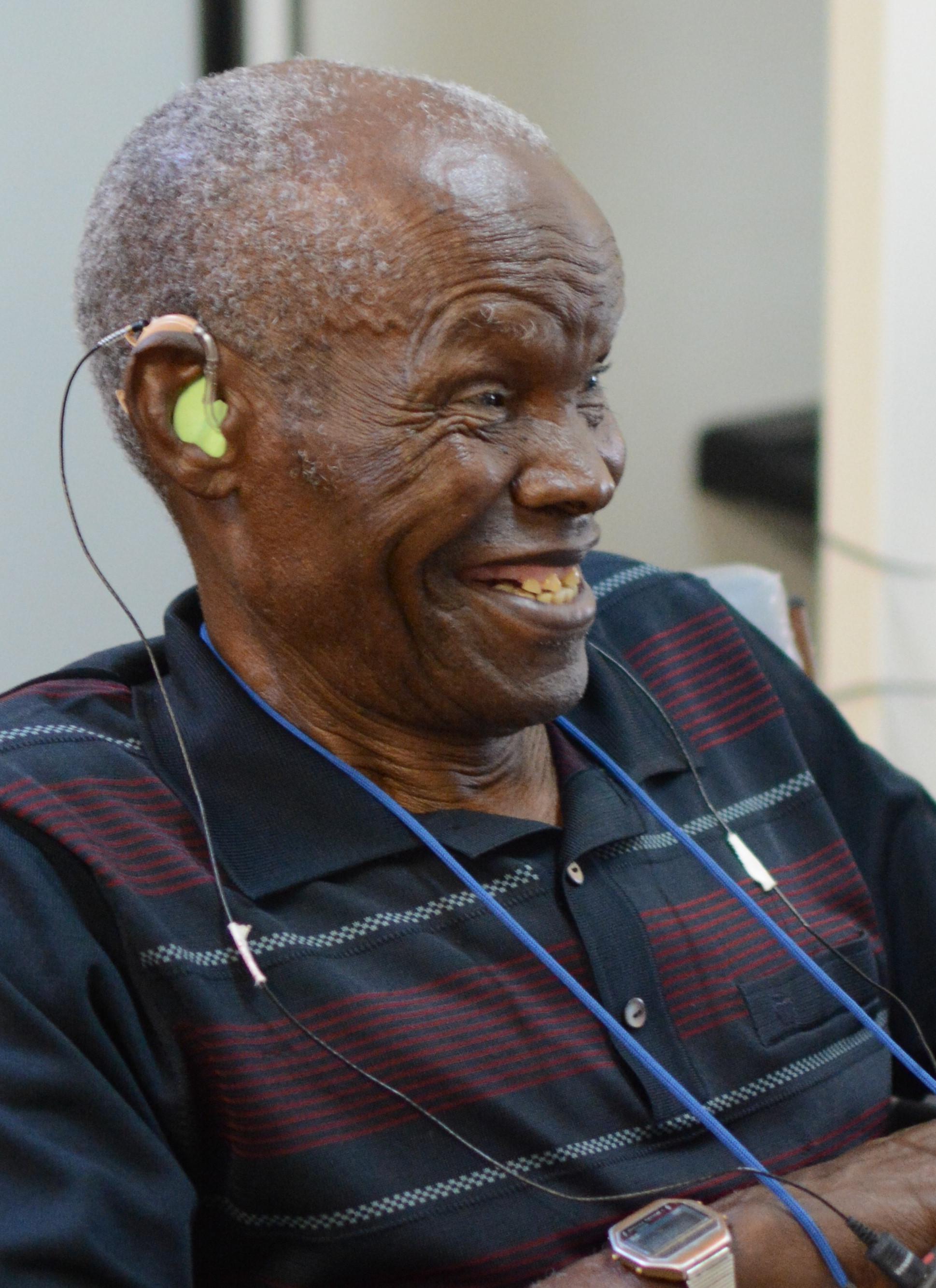
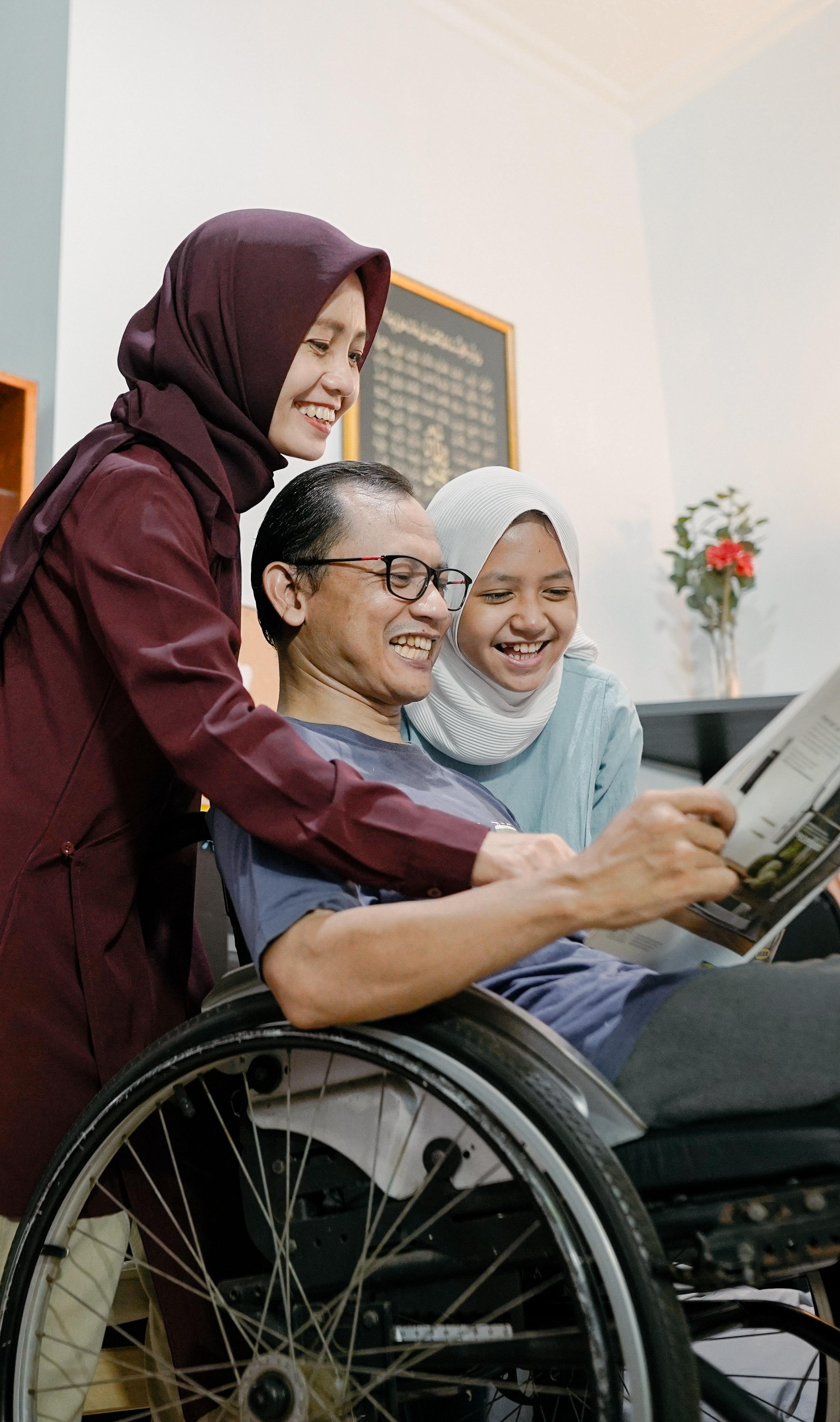
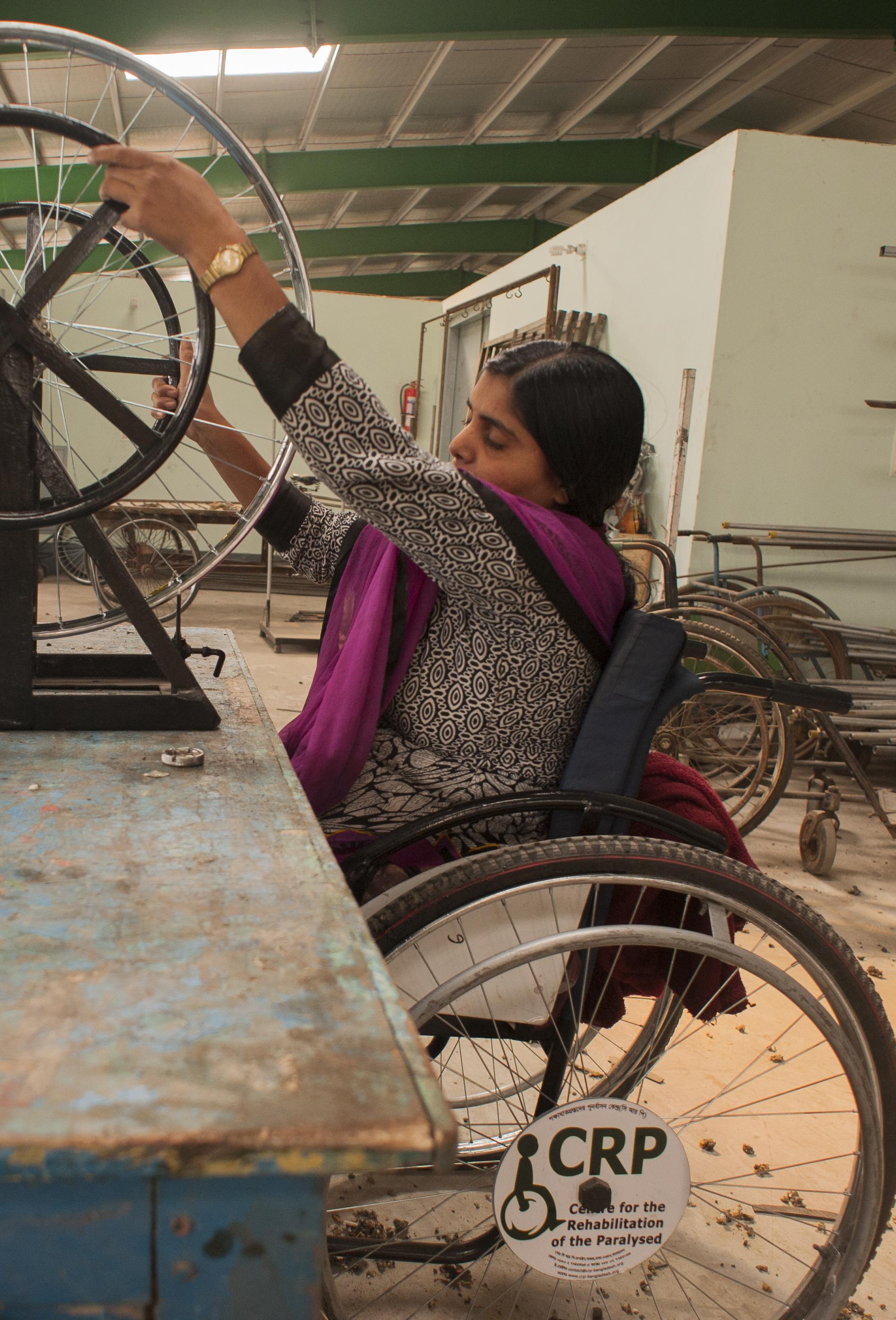
Click on each image below to download the briefs in English, French, Spanish, and accessible versions to discover why assistive technology matters.