Why assistive technology matters for early childhood development
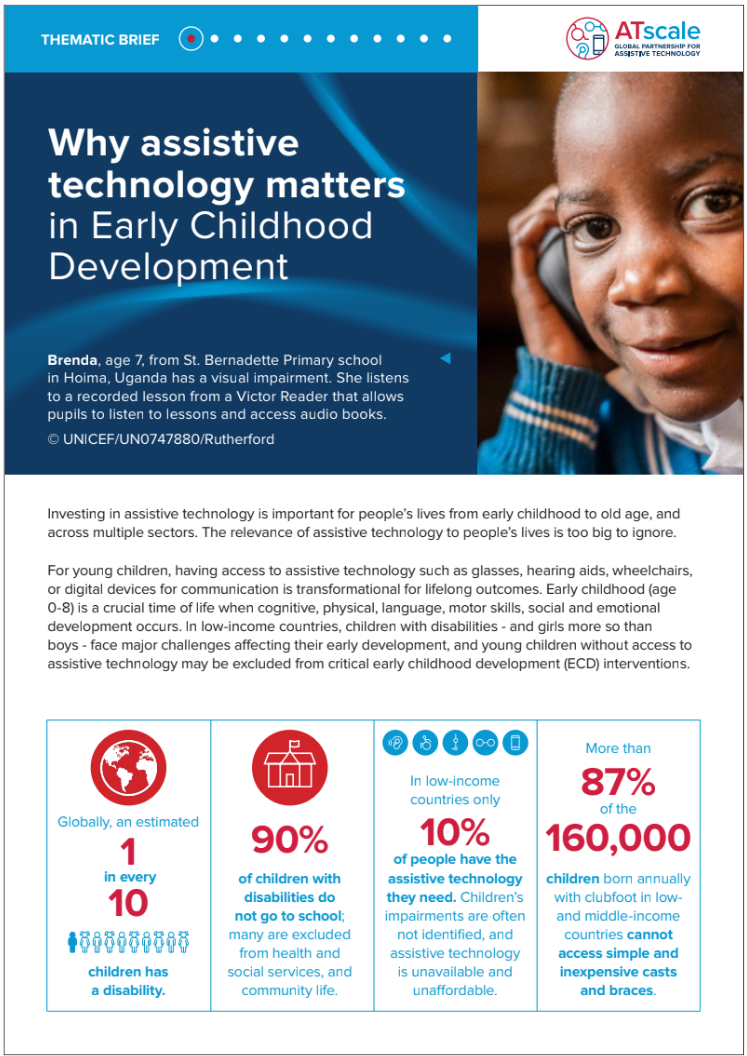
Investing in assistive technology is important for people’s lives from early childhood to old age, and across multiple sectors. The relevance of assistive technology to people’s lives is too big to ignore.
Early childhood (ages from birth to eight) is a crucial time of life when cognitive, physical, language, motor skills, and social and emotional development occurs. In low-income countries, children with disabilities - and girls more so than boys - face major challenges affecting their early development, and young children without access to assistive technology may be excluded from critical early childhood development (ECD) interventions.
A series of thematic briefs explain the cross-cutting nature of assistive technology and why assistive technology matters for various sectors.
The aim of the series is to advocate the inclusion of assistive technology considerations in cross-sectoral strategies and operational plans at national level, and in global policies and guidance; to encourage other sectors to consider the significant role assistive technology plays in helping them achieve their own goals, especially for inclusion and equity, and to make a clear link with the relevant Sustainable Development Goals (SDGs).
We expect them to be read by donors, partners, policy makers, AT experts, advocates and practitioners, and all those interested in equity, universality and achieving the SDGs
Click on each image below to download the briefs in English, French, Spanish, and accessible versions to discover why assistive technology matters.