Systems strengthening for assistive technology: governance and leadership
What is systems strengthening for assistive technology?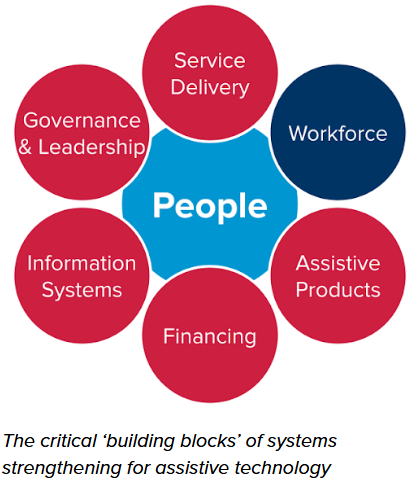
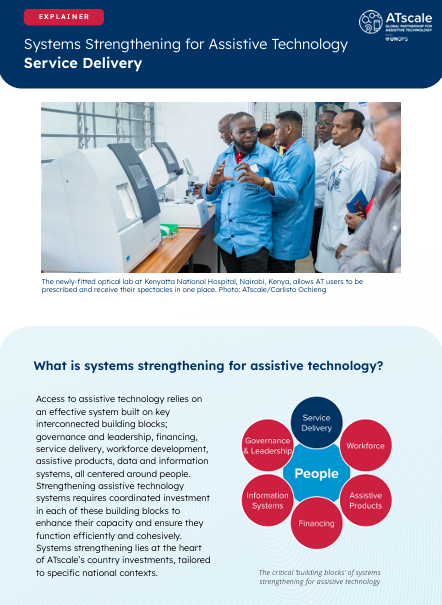
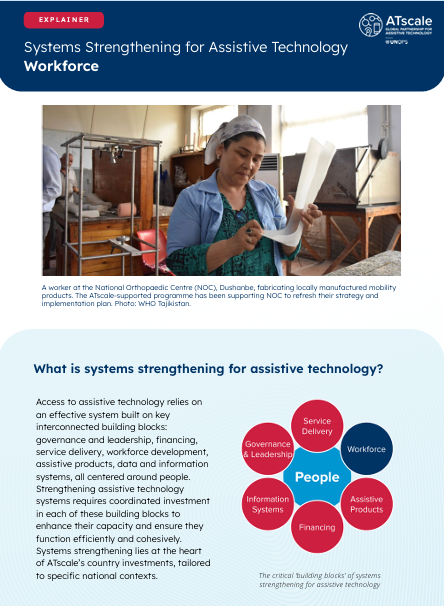
Access to assistive technology relies on an effective system built on key interconnected building blocks: governance and leadership, financing, service delivery, workforce development, assistive products, data and information systems, all centered around people. Strengthening the assistive technology system requires coordinated investment in each of these building blocks to enhance their capacity and ensure they function efficiently and cohesively. System strengthening lies at the heart of ATscale’s country investments, tailored to specific national contexts.
What are the key challenges?
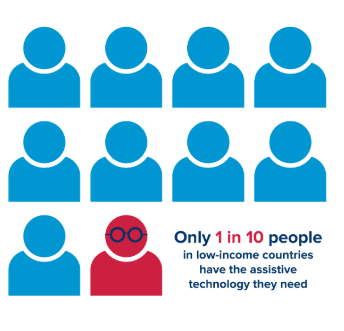 Worldwide, more than 2.5 billion people need one or more assistive products, such as wheelchairs, hearing aids, prostheses, spectacles or digital assistive technology. This number is expected to rise to 3.5 billion in 2050.
The presence of legislation surrounding the right to access assistive technology is only one step towards provision. Whilst many countries have legislation specifically for assistive technology or that explicitly mentions provision, budget lines and implementation of services are more challenging to implement. In addition, legislation is likely to cover different functional domains differently, creating disparity in service provision and funding. Lack of awareness also affects the prioritization of assistive technology by governments, limiting its integration into national social service strategies and policies and Universal Health Coverage.
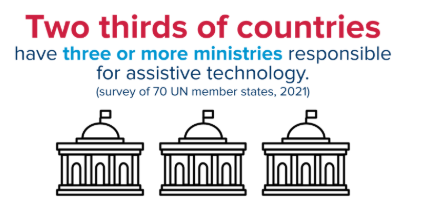
As assistive technology is a cross-cutting topic, responsibility can be shared or contested, leading to fragmented efforts and a lack of leadership. Whilst the Ministries of Health and Social Services are often the responsible ministries, the other ministries such as finance, education, labour, trade and commerce, defence and telecommunications may also have different programmes serving different population groups, meaning access is not always equitable.
How does ATscale address these challenges?
ATscale-supported programmes are carried out in collaboration with national governments. ATscale interacts with designated government focal points throughout the programmes, from design to implementation, to ensure alignment and government buy-in.
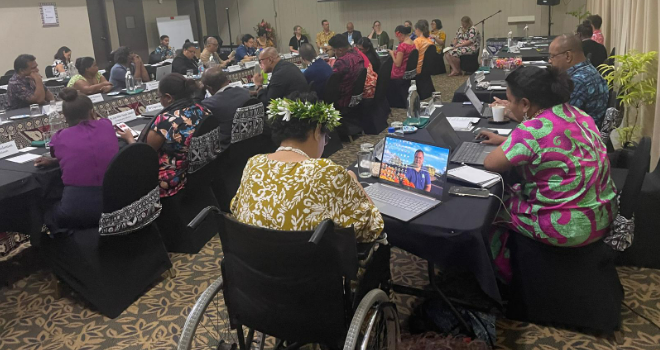
A key activity in ATscale-supported programmes is the formation of a Technical Working Group focused on planning and implementing the AT agenda. Implementing partners, under the leadership of the focal ministry, are encouraged to convene key stakeholders, including other inter-sectoral ministries, civil society organizations including organizations of persons with disabilities, UN partners and the private sector involved in assistive technology. This cultivates knowledge sharing and improves coordination. These working groups, amongst other things, support consultations, the development of national AT road maps, strategies and action plans, and provide feedback on draft policies. The ambition for these groups is to continue as long-term public bodies, in alignment with relevant national steering committees to ensure accountability. Through data collection and targeted advocacy campaigns, ATscale-supported programmes play an instrumental role in raising awareness of assistive technology needs within countries, generating key evidence for policymakers to make informed decisions.
Another feature of many programmes is often also the creation of a Priority Assistive Product List, based on the WHO list. This list is used as a tool in the programme’s implementation and is particularly valuable as a mechanism to discuss and implement the provision of products, including undertaking key political decisions on government budget allocation, pooled procurement, local production and the reduction of tariffs and taxes on assistive products.
Stories of impact
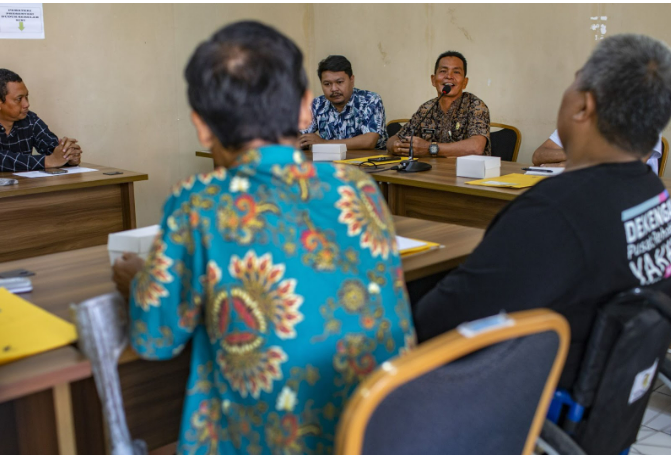
Indonesia - Technical Working Groups have been formed, or where they already existed, augmented, as part of ATscale-supported programmes in Bangladesh, the Democratic Republic of the Congo, El Salvador, Indonesia, Kenya, Lesotho, Mozambique, Nepal, Peru, Senegal, Tajikistan, Tanzania and Zimbabwe. In Indonesia, the AT fulfilment working group established for Central Java was instrumental in the progress made by the programme, including leading the design and development of the AT roadmap.
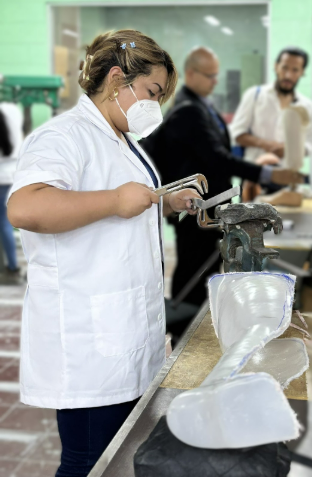
El Salvador - As one of ATscale’s foundational investment countries, the programme in El Salvador focused on ecosystem strengthening, including developing an AT action plan that forms part of the National Strategic Plan for Rehabilitation. This plan will be used by the Ministry of Health to inform national policy and funding decisions regarding assistive technology as part of the wider scope of rehabilitation.
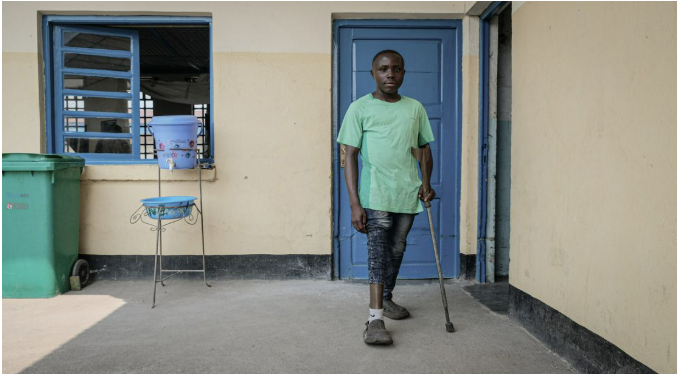
Democratic Republic of the Congo - Many of ATscale-supported programmes develop or strengthen a national priority Assistive Product List, including in Bangladesh, Democratic Republic of the Congo, El Salvador, Lesotho, Mozambique, Nepal and Zimbabwe. In Democratic Republic of the Congo, the Ministry of Health is integrating the developed APL in the National Essential Medicines List to ensure integration of AT into both the national budget and the national health information system.