Systems strengthening for assistive technology: assistive products
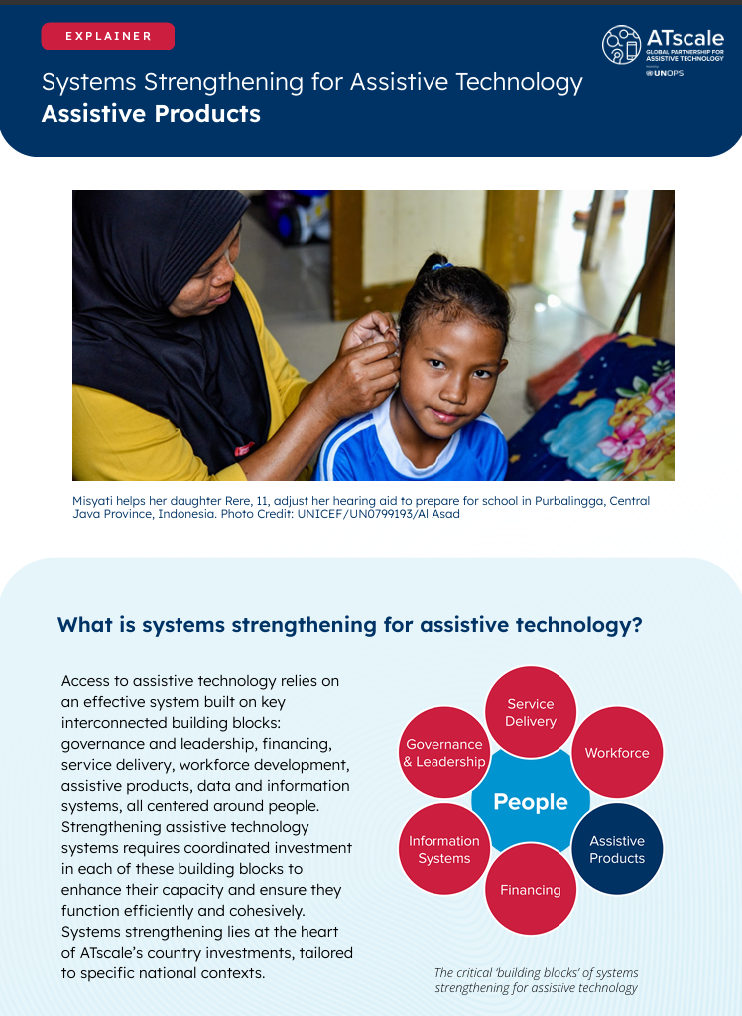
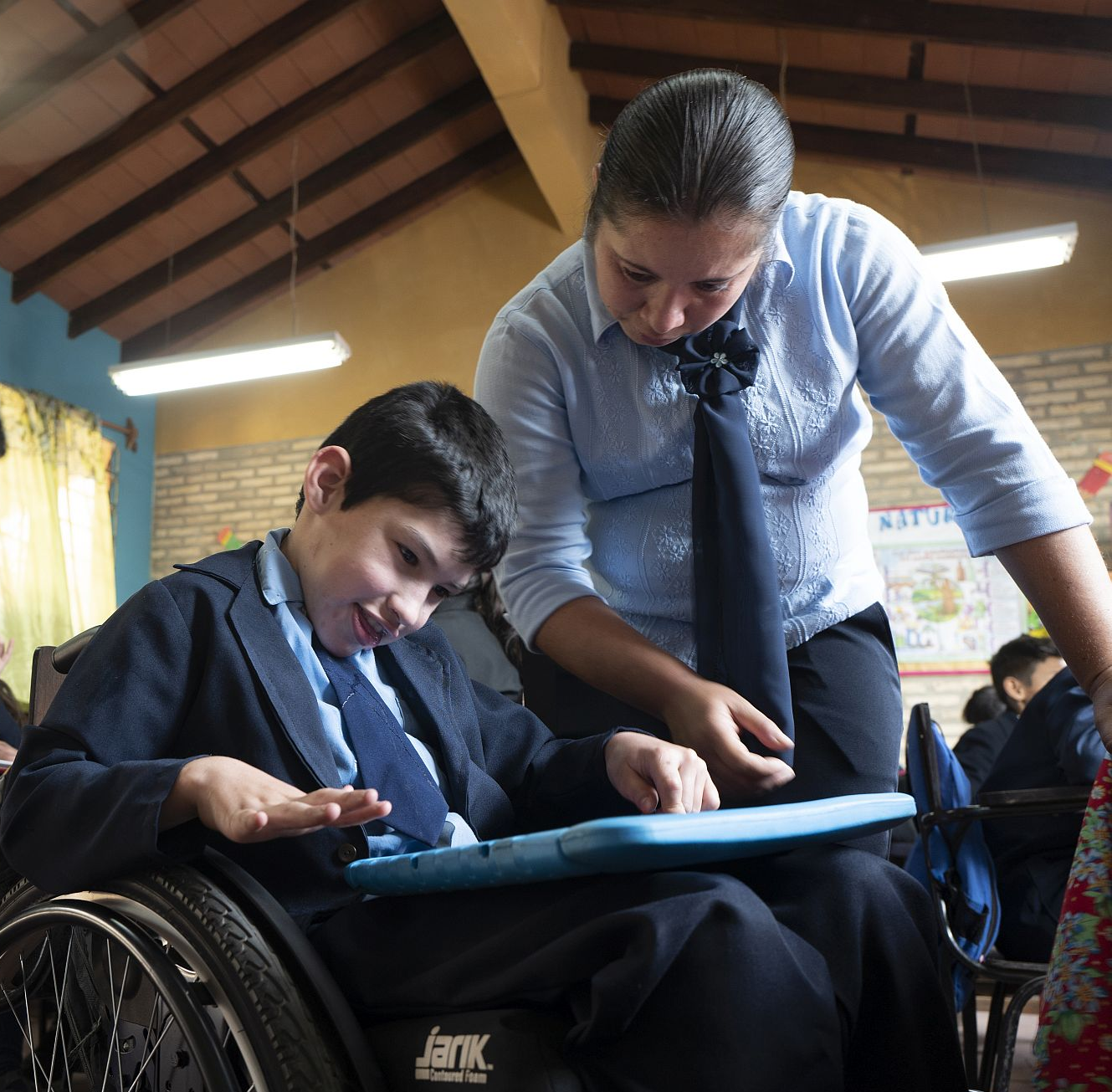
Worldwide, more than 2.5 billion people need one or more assistive products, such as wheelchairs, hearing aids, prostheses, spectacles or digital assistive technology. This number is expected to rise to 3.5 billion in 2050.
Assistive products are difficult to access in low- and middle-income countries due to several factors, including high costs, limited supply and poor environmental suitability. Where products are available, they may be of poor quality due to insufficient or a lack of testing and limited technical standards, making them unsuitable for use and likely to have a short lifespan.
The price of assistive products is often prohibitive to those who need them, driven up by tariffs and taxes such as customs duties, import taxes and VAT. Poor supply is compounded by limited investment in local manufacturing, meaning people are reliant on imported products.