Event Summary: Unlocking global access: financing assistive technology and navigating international trade Systems
Date: Thursday, 11 June 2026
Venue: Conference Room 11, United Nations Headquarters, New York
Lead Organizers: Permanent Mission of the United Kingdom to the United Nations, Permanent Mission of the People’s Republic of China to the United Nations, and ATscale (the Global Partnership for Assistive Technology, hosted by UNOPS)
Co-Sponsors & Partners: International Disability Alliance (IDA), UNICEF, and the China Disabled Persons' Federation (CDPF), the governments of the Solomon islands and Tanzania
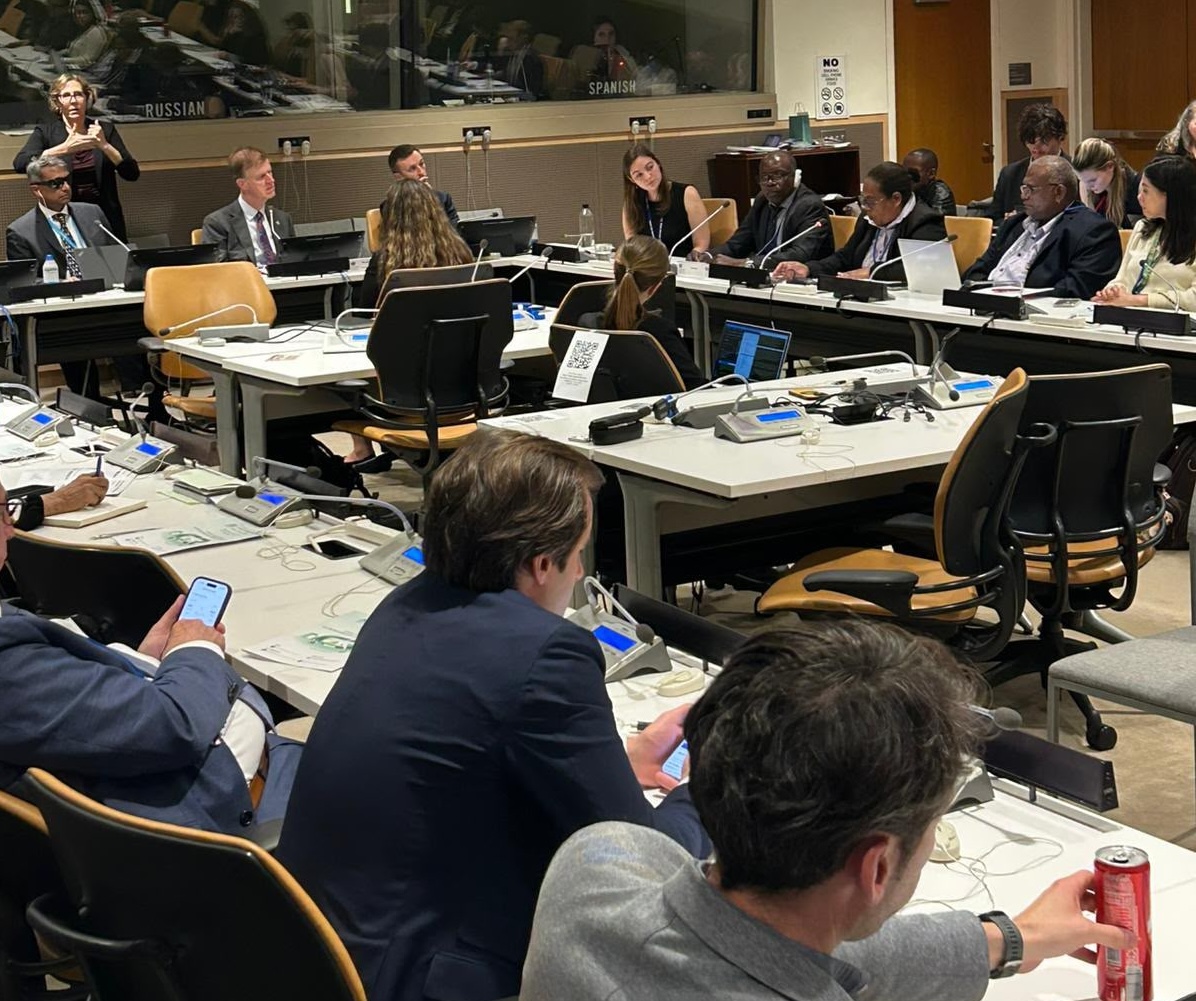
Marking the 20th anniversary of the adoption of the Convention on the Rights of Persons with Disabilities (CRPD), this highly attended side event shifted the global dialogue on assistive technology (AT) from a purely medical or social welfare lens to a critical economic, fiscal, and international trade priority.
Currently, over 2.5 billion people globally require one or more assistive products—a figure projected to top 3.5 billion by 2050. Yet, in low- and middle-income countries (LMICs), only 10 per cent those in need have access to these life-changing tools. By focusing on the intersections of global procurement, national finance, and border regulation, this session unpacked how uncoordinated trade policies, high tariffs, and logistical bottlenecks actively inflate the cost of inclusion. The overarching consensus was clear: assistive technology is a fundamental trade and human rights issue, and global trade systems must be modernized to unlock the barriers to access affordable and appropriate assistive technology.
🎙️ Opening remarks & keynote address
Gopal Mitra | Event Moderator, UNICEF
Opening the session, Gopal Mitra set a solutions-focused tone, framing trade barriers as systemic obstacles that prevent high-level human rights treaties from materializing on the ground.
"When we explore the reasons why people with disabilities are not accessing assistive devices, the barriers in trade and finance stand up as significant obstacles that impede access. Today, we will try to explore... how can trade be leveraged to promote inclusion, rather than behave as a barrier?"
Sir Stephen Timms | Minister of State for Social Security and Disability, United Kingdom
In his keynote address, Minister Timms positioned the UK as a proactive leader in market-shaping approaches. He outlined the obstacles that current trade rules face such as those that classify essential, life-changing devices as ordinary, taxable consumer products.
"Assistive products are kept out of reach for many people with disabilities around the world who need them most... Assistive technology—wheelchairs, hearing aids, a digital device like a screen reader—are not luxuries! They are fundamental prerequisites to fully participate in society."
"Our global trade systems are inflating and increasing the cost of inclusion... When uncoordinated fiscal policies, administrative red tape, and misclassifications at borders drive up prices, we are effectively taxing the independence of persons with disabilities, older persons, and others who need assistive devices."
Technical presentation: Demystifying trade barriers
Ceridwen Johnson | Advocacy and Communications Advisor, ATscale
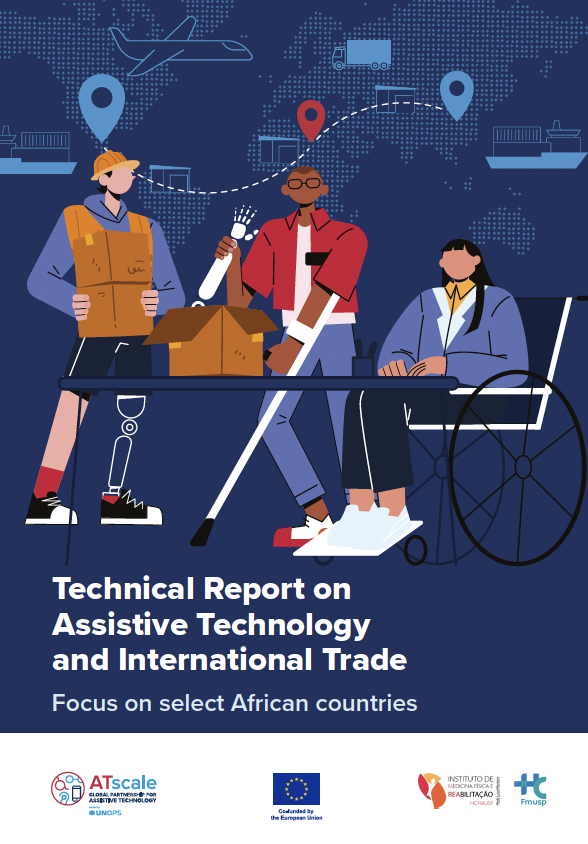
Ceridwen presented the findings of ATscale's newly released Technical Report on Assistive Technology and International Trade. The research focused on four key products (wheelchairs, hearing aids, spectacles, and prostheses) across a pan-African scope, with deep-dives into Chad, Egypt, Kenya, Mozambique, and the Republic of the Congo.
Some key highlights
Import dependency: The African continent accounts for the smallest share of global AT imports (just over 1% of world imports between 2016 and 2023), yet local manufacturing is almost non-existent, meaning the continent relies almost entirely on external trade.
The "Luxury" Spectacles Tax: While hearing aids and wheelchairs are often exempted from tariffs, spectacles are routinely taxed as luxury goods. Tariffs on spectacles reach up to 30% with standard Value-Added Tax (VAT) up to 18%.
The Kenyan Pricing Case: In Kenya, after compounding customs charges 25%, import tariffs 10%, and VAT 16%, the retail price of spectacles skyrockets to 1.6x the original ex-factory price.
Success story (Zimbabwe): Thanks to the advocacy of Organizations of Persons with Disabilities (OPDs) during budget consultations, Zimbabwe established a multi-sectoral working group to conduct a revenue impact assessment, successfully eliminating import taxes on priority assistive products.
"Assistive technology is a trade issue. We need to look at it from that perspective as well as from a human rights, social development and health perspective.We need flexible, evidence-based, and cross-sectoral collaboration to move from political commitments to concrete actions that lower trade barriers and expand access to assistive technology for all who need it.”
Panel discussion: National perspectives and lived experience
The panel brought together government representatives, user advocates, global suppliers, and technical experts to map practical pathways for reforming supply chains.
Mrs Elsie Taloafiri, Director National rehabilitation and disability division, ministry of health and medical services, Solomon Islands
Representing a hard to reach Pacific Island nation, Mrs Elsie Taloafiri highlighted the profound logistical hurdles of distributing assistive products across geographically scattered islands and advocated for regional pooled procurement structures.
"With the geographical scatteredness of our islands, the logistics serve as the greatest challenge we face for those with special needs getting assistive technology... We are developing a national priority product list and joining the Pacific regional rehabilitation assistive technology programme to strengthen procurement and make these products affordable."
Mr. Wambura Lucas Kizito, Acting director for persons with disabilities unit in the Prime Minister's Office in Tanzania.
Mr. Kizito shared Tanzania's systemic progress, detailing the national programme for assistive technology which integrates AT directly into primary healthcare services, but called for stronger international cooperation, funding, and training assistance.
"Fulfilling our commitments under the Convention on the Rights of Persons with Disabilities, we must ensure that assistive technology is a sustainable investment rather than an optional expenditure... For many low and middle income countries, the cost of importing these assistive products is a significant barrier. The procurement mechanisms, the porting technology transfer, and promoting regional production can increase affordability and accessibility. We all have an important role to expand access for equality for assistive technology.
Esther Nagetey | Youth and Gender Advisor, International Disability Alliance (IDA)
Speaking as a blind youth activist and direct user of AT, Nagetey demystified the dry, economic terminology of trade by illustrating the severe personal costs of customs delays and exorbitant markups.
"My screen reader and accessible devices are not luxuries. These are part of how I exercise my rights... When trade systems create barriers to assistive technology, they create barriers to rights. A delay in a device for a young blind person could be 6 months of lost education or employment."
"When trade systems create barriers to assistive technology they create barriers to rights. My plea and request is that, similar to medicines and vaccines, there should be an override on intellectual property with assistive technology—allowing for local delivery and production to make it affordable."
Ms. Xu Ling | Director-General of Department of International Liaison, China Disabled Persons' Federation (CDPF)
China is the world's leading manufacturer and exporter of assistive products. Ms. Xu outlined China's robust domestic 5-tier service system and expressed China's willingness to help close the global supply-demand gap.
"China's AT manufacturers are setting up new factories in the UAE... but due to misalignments, trade barriers, and misunderstandings, China's potential has not been fully matched in developing countries. We are willing to deepen cooperation, enhance information-sharing, and facilitate more efficient circulation of assistive technologies."
Alexandre Cote | Disability and Social Protection Policy Specialist at UNICEF
Cote explained how UNICEF leverages its massive procurement footprint to drive down prices, but emphasized that international supply chains only work if governments build systems to identify and aggregate local demand.
"We can import and facilitate, but we can't if there's no clear demand. The government won't invest and private providers won't do their job if we don't have early identification... If electronic information systems have real-time data of who needs what, we can build up administrative demands which translate to budget forces."
Session outcomes and recommendations
To translate the Technical Report on Assistive Technology and International Trade into concrete, sustainable global reforms, the organizing partners referred the audience to some of the recommendations from the report:
- Use more accurate, harmonized system codes to track trade.
- Align trade policies with local or regional production capacities and treat assistive products as essential goods.
- Ensure existing tariff exemptions are actually applied at the customs level through training for officials.
- Foster a "whole-of-government" approach and continue the work of the inter-agency working group (UNCTAD, WTO, ITC, ILO) to align priorities across trade, finance, and social sectors.
- Meaningfully involve organizations of persons with disabilities (OPDs) in all stages of policy design, implementation, and monitoring.
- Establish local & regional production hubs: Shift from a dependence on expensive imports by investing in local assembly and repair initiatives (such as the "Made AT Kenya" project), creating green local jobs and resilient regional supply chains.