

ATscale publications
Key reports, research and strategic documents from ATscale
©UNICEF
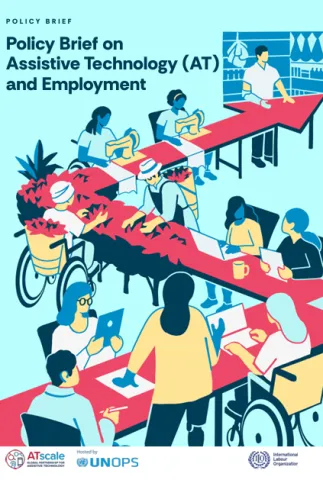
Policy Brief
Policy brief on assistive technology and employment
This policy brief highlights the crucial role of Assistive Technology in expanding employment opportunities for persons with disabilities and other AT users in low- and middle-income countries (LMICs). It delves into the barriers faced by both AT users in accessing and effectively utilizing AT for employment purposes, and employers in providing or integrating AT for their employees.

Policy Brief
Leveraging assistive technology for inclusive disaster risk reduction and climate action
This joint policy brief by the United Nations Office for Disaster Risk Reduction (UNDRR) and the ATscale, the Global Partnership for Assistive Technology, examines how the rights and needs of assistive technology users can be more effectively addressed in DRR and climate action.
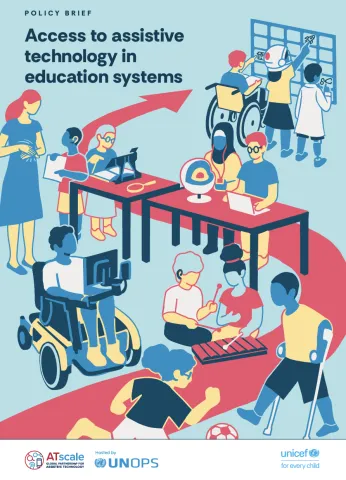
Policy Brief
Access to assistive technology in education systems
This policy brief, jointly developed by UNICEF and ATscale, the Global Partnership for Assistive Technology, underscores the vital role of assistive technology in enhancing access to education and learning opportunities for all children.
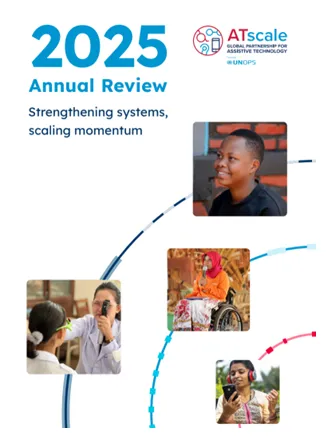
Report
2025 annual review
The ATscale annual review 2025 provides an in-depth look at a pivotal year for the Partnership, detailing our strategic transition from foundation-building to delivering results at scale.

Policy Brief
Unlocking HER potential: Gender equality through equitable access to assistive technology.
Jointly developed by UN Women and ATscale, this policy brief highlights the critical role of assistive technology in accelerating gender equality.
Report
Domestic Financing for Assistive Technology
Technical report for strengthening access to affordable quality products and servicesGlobally, 2.5 billion people need one or more assistive products. Access to assistive technology and associated services leads to large societal welfare gains, from everyday independence for the individual and supporting family, increasing education and labour force participation, to economic growth and social equity. Through these mechanisms, every dollar spent on assistive technology yields nine dollars in return.
Check out our Resource Hub. Your go-to destination for AT resources