Autorefractor technical report and country guidance
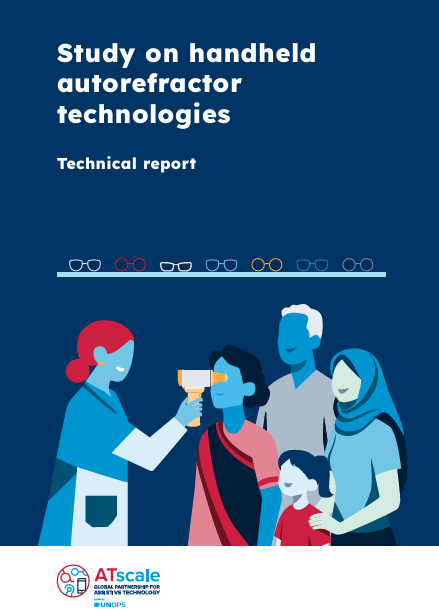
Uncorrected refractive errors (UREs) are a significant global public health challenge, affecting millions of people in low- and middle-income countries, who remain undiagnosed due to lack of access to screening equipment and a shortage of clinicians. This has prompted the exploration of technologically advanced, compact hand-held autorefractors as a viable and scalable alternative to traditional refraction methods, particularly in low-resource settings.
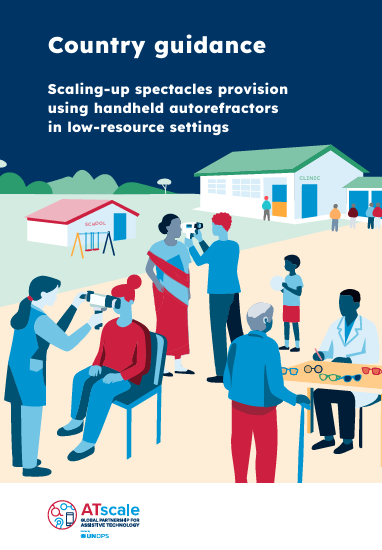
Hand-held autorefractors allow screening and provision of spectacles to correct refractive errors outside traditional clinical settings, without the need for expensive, cumbersome equipment, meaning more local and rural communities can also be reached.
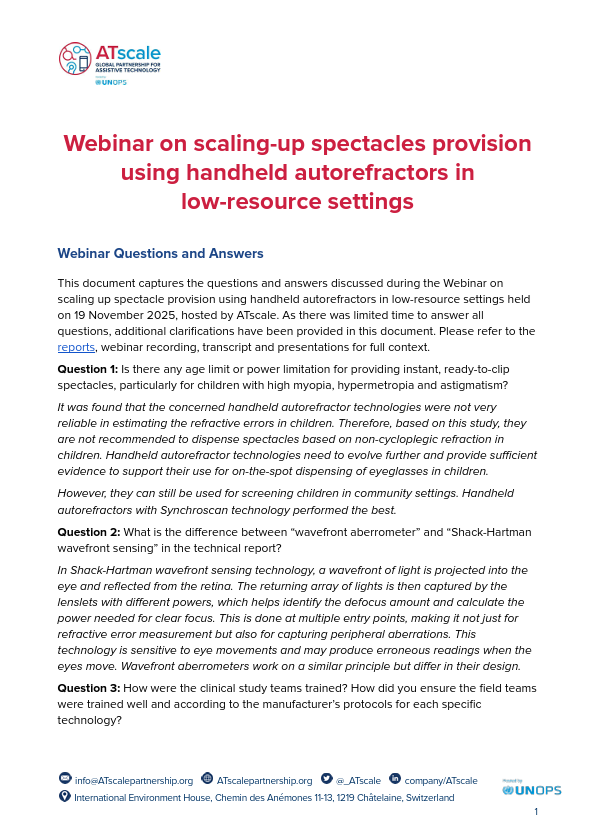
To assess the clinical effectiveness of autorefractor technology, a multi-country study was conducted across Ethiopia, Nepal and Nigeria. This study, commissioned by ATscale, was carried out by IQVIA and the LV Prasad Eye Institute and aimed to compare hand-held autorefractors with conventional refraction methods, evaluate prescription alignment and determine the feasibility of integration into public health systems in low-resource settings for on-the-spot provision of spectacles.
Alongside the technical report, country guidance has been prepared to distill the findings for all stakeholders in eye and vision care.