Assistive products market report 2024
The report analyses markets for eyeglasses, hearing aids, prostheses, wheelchairs and digital technology, outlining solutions to improve cost and availability.
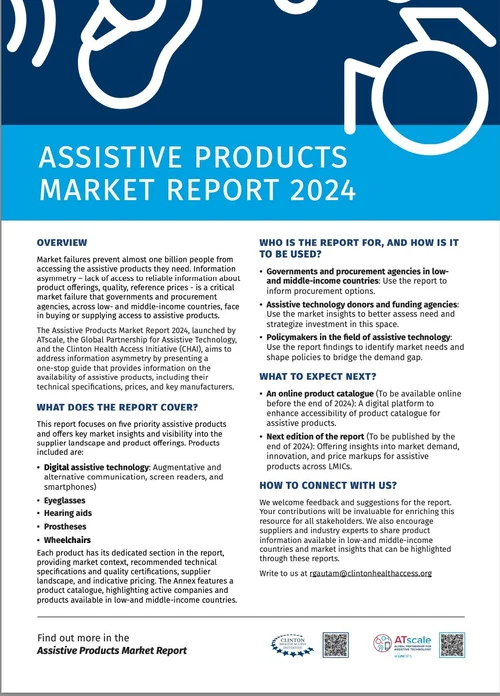
Launched on 4 June 2024, during the first ever World Day for Assistive Technology, the report aims to help enhance the availability of affordable, high-quality assistive products in low- and middle-income countries.
This first report highlights the following:
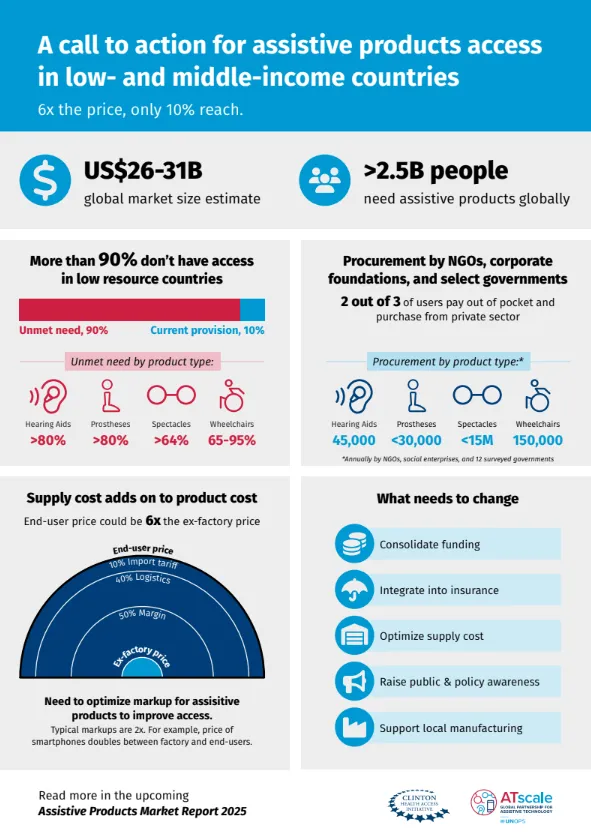
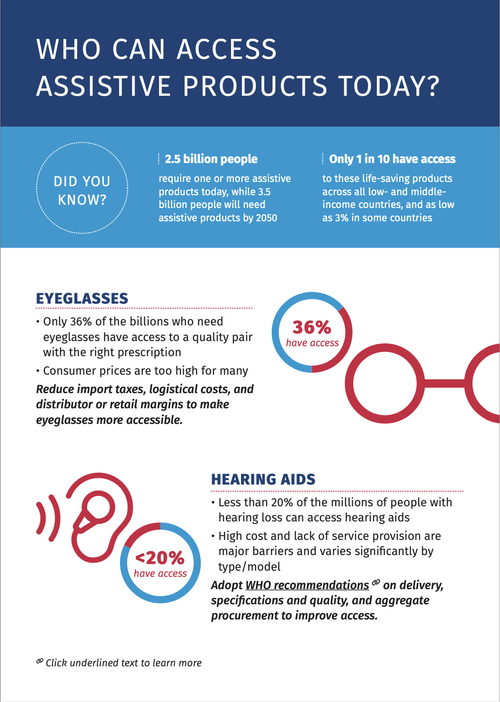
- Of the billions of people who need eyeglasses, just 36 per cent can access them. Some 90 per cent of the unmet need for eyeglasses is in low- and middle-income countries. Consumer prices are too high for many but can often be brought down by reducing import taxes, logistical costs and distributor or retail margins.
- Hearing aids are available to just 20 per cent of the hundreds of millions of people with hearing loss. Most of these people live in low- and middle-income countries, where costs are the major barrier. Hearing aids vary a lot, however, and so do their prices. Adopt WHO recommendations on specifications and quality. Work with ATscale and UNICEF on procurement.
- Prostheses are available to just 20 per cent of the roughly 65 million people who need them. Demand is expected to double by 2050, linked to the growth of traumas and non-communicable diseases, especially diabetes. More affordable solutions are emerging, but the ambiguity of quality standards remains a concern.
- Screen readers are software applications that convert digital text and visual information into synthesized speech or braille output. They can therefore support the nearly 340 million people who are blind or with limited vision. Further research will shine more light on his rapidly growing market segment.
- Smartphones can act as assistive devices in multiple ways, but people with visual or communication impairments in low- and middle-income countries are less likely to have access. A lack of connectivity compounds this issue. Smartphone ownership is around 76 per cent in high-income countries but as low as 21 per cent in sub-Saharan Africa. People with disabilities in low- and middle-income countries are even less likely to own a smartphone.
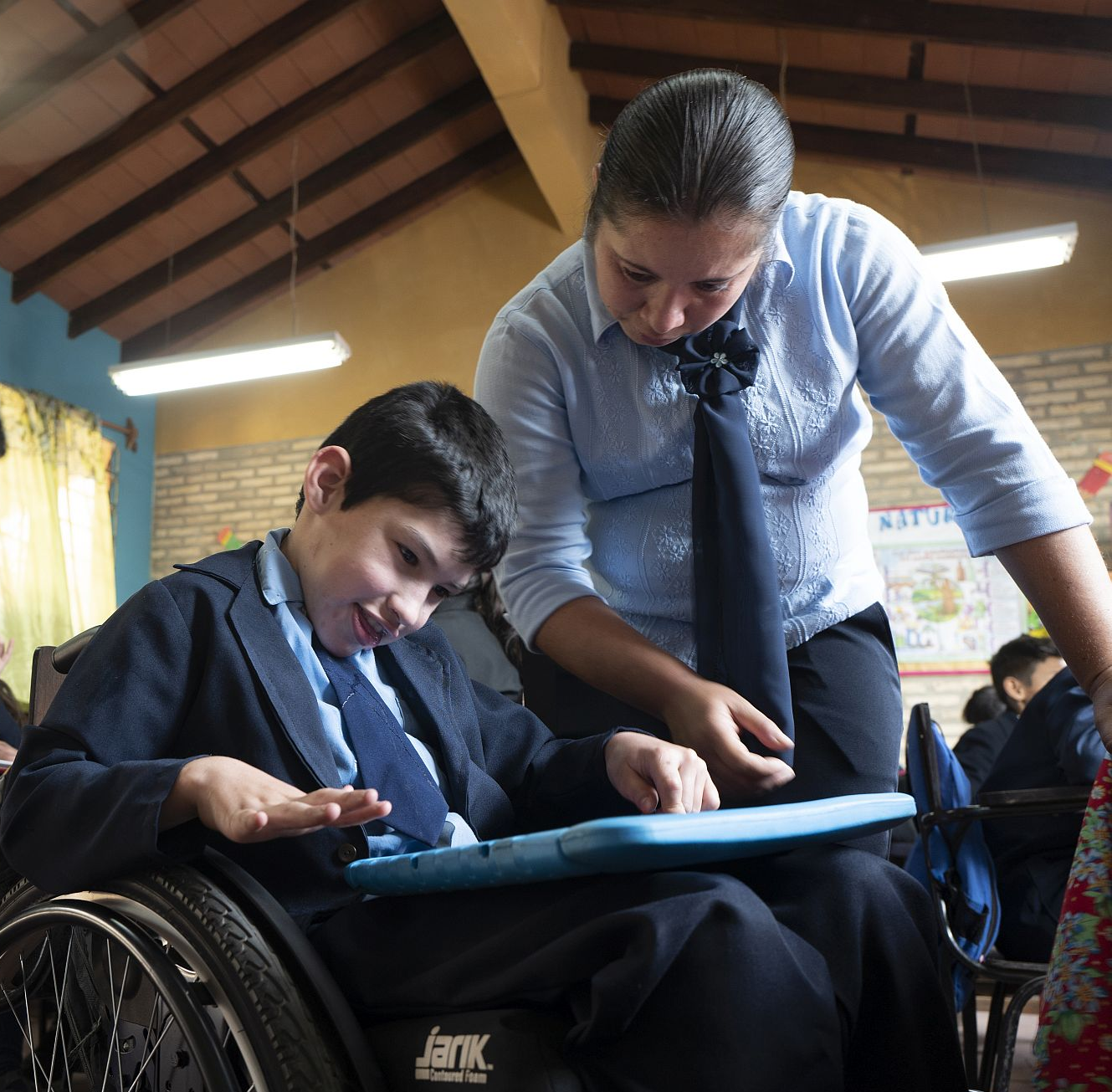
- Wheelchairs are available for just 5 to 35 per cent of the 80 million people who need them. Of these, 65 million are in low- and middle-income countries. Key barriers are high costs and lack of local manufacturers. ATscale, UNICEF and others are working to make wheelchairs more widely available.
This assistive products market report, and future versions, have an ambitious mandate to explore cutting-edge solutions, pricing and data in more detail, including at national levels. The report welcomes inputs from suppliers, who are interested in contributing information and insights for future reports.
To further disseminate the findings of the report, ATscale and CHAI hosted a webinar featuring speakers from ATscale, CHAI, CBM and the government of Cambodia sharing their findings and reactions to the report.