Local successes inform regional standards: Scaling up access to assistive technology across WHO/Europe
The global challenge of accessing essential assistive technology is being met with regional momentum, spearheaded by WHO/Europe, which serves 53 countries from Iceland to Tajikistan. Through a strategic partnership, ATscale and the WHO Regional Office for Europe are working to build a dynamic regional community. Their vision is to strengthen systems for accessing assistive technology and to establish hubs that facilitate system-wide learning and regional policy change.
Thanks to this collaborative approach, every national success story immediately becomes a shared asset for all 53 Member States. The initiative began with targeted support in three countries—Azerbaijan, Georgia, and Tajikistan—but the core objective remains to maximize this initial investment, transforming their successful experiences into a blueprint for regional change.
Voices from countries
The regional movement is built on success from the ground. In Azerbaijan, systemic change has been driven by concrete needs, particularly around policymaking. The expansion of the national Assistive Products List (APL) brought essential relief, demonstrating that legislative change is fundamentally a matter of dignity and financial equity. “Until recently, if someone needed an assistive product, they had to buy it themselves—if they could afford it... That’s a huge financial burden,” explained Mr Asif Majidov, Director of the Prosthesis and Orthosis Production and Rehabilitation Centre. This reform was not merely bureaucratic; as Mr Majidov noted, “it was a message to our patients that their needs are seen and understood.”
These changes are viewed by policymakers and users alike as human rights issues that demand system-wide coordination. “There is a need for national rehabilitation law in Azerbaijan. We must develop one, and it must enshrine access to assistive technology as a right,” asserted Dr Vugar Mammadov, a key official ensuring AT provision. For users like Ana Sikhashvili in Georgia, access to quality AT is directly linked to social participation: “I would read using a notetaker, access resources in Braille and study using audio books throughout my academic journey. Assistive products have enabled me to pursue higher education independently.”
The multiplier effect: Catalysing action for regional learning
The power of this initiative is driven by the deliberate focus on knowledge exchange. The investment made in three countries is now strengthening AT systems far beyond the original scope, engaging additional countries such as Armenia, Moldova, Ukraine and Uzbekistan through targeted inter-country learning events. This effort multiplies the return on investment for all partners.
Data collected across the region about access to assistive technology has been formally embedded into WHO’s Health Information Gateway, ensuring European-level use of the data and guidelines for policy and planning across all 53 Member States. Without WHO Europe’s convening role, this level of inter-country collaboration would simply not be possible. This investment strategically positions WHO as the essential hub for knowledge transfer, standard-setting, and scaling, ensuring no country is left to start from scratch.
A timeline of shared capacity
Applied peer exchange and cross-country collaboration is the mechanism strengthening regional capacity. A series of landmark inter-country learning events have successfully embedded procurement best practices and rigorous quality standards across borders:
In June 2023, the Intercountry Learning Exchange in Tbilisi fostered South–South collaboration, bringing Tajik and Georgian stakeholders together to directly improve local implementation strategies.
In May 2024, the Regional AT Procurement Workshop in Copenhagen convened six countries (Azerbaijan, Georgia, Tajikistan, Armenia, Uzbekistan, Moldova) alongside UNICEF, building shared, robust capacity in procurement.
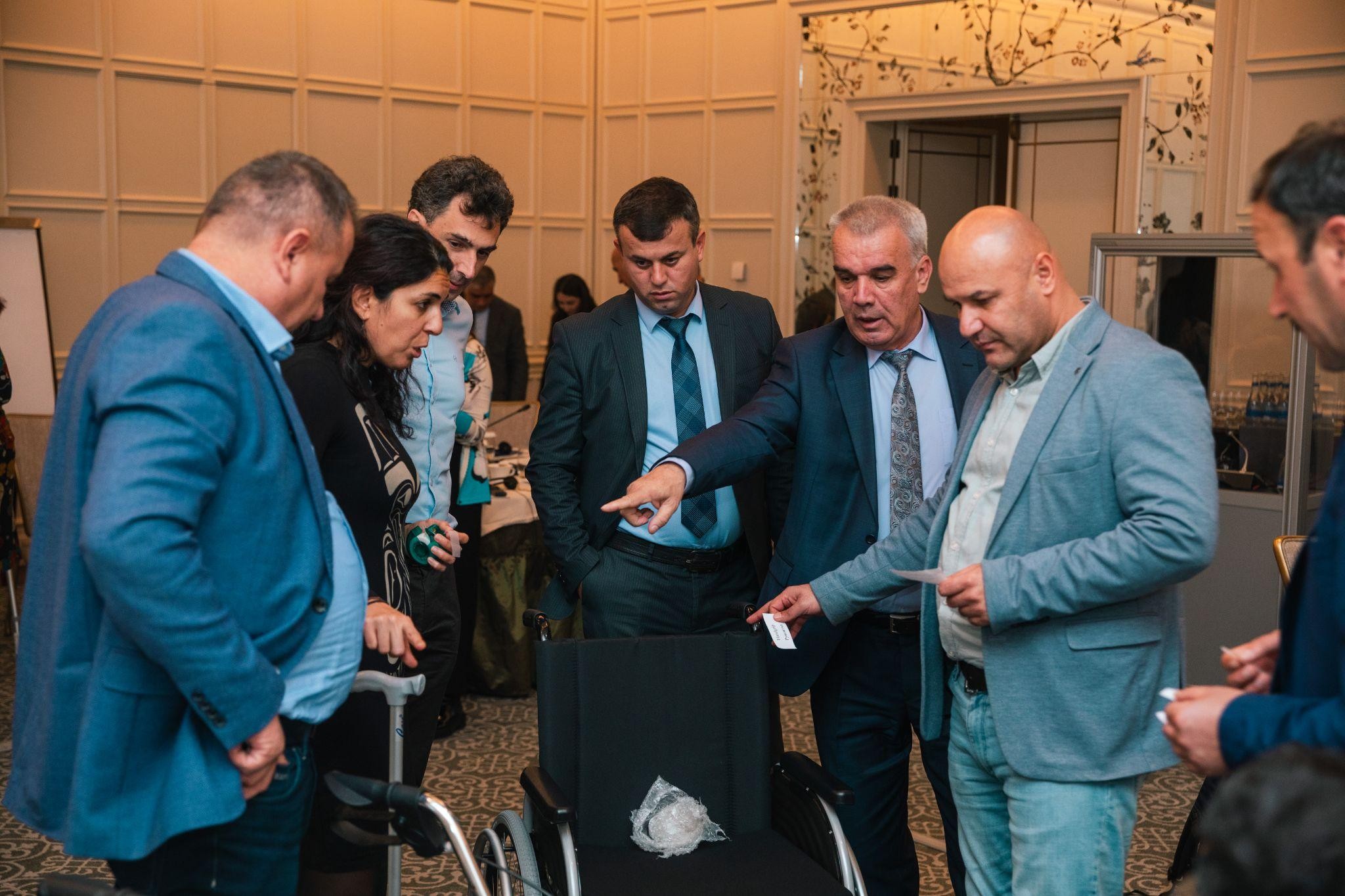
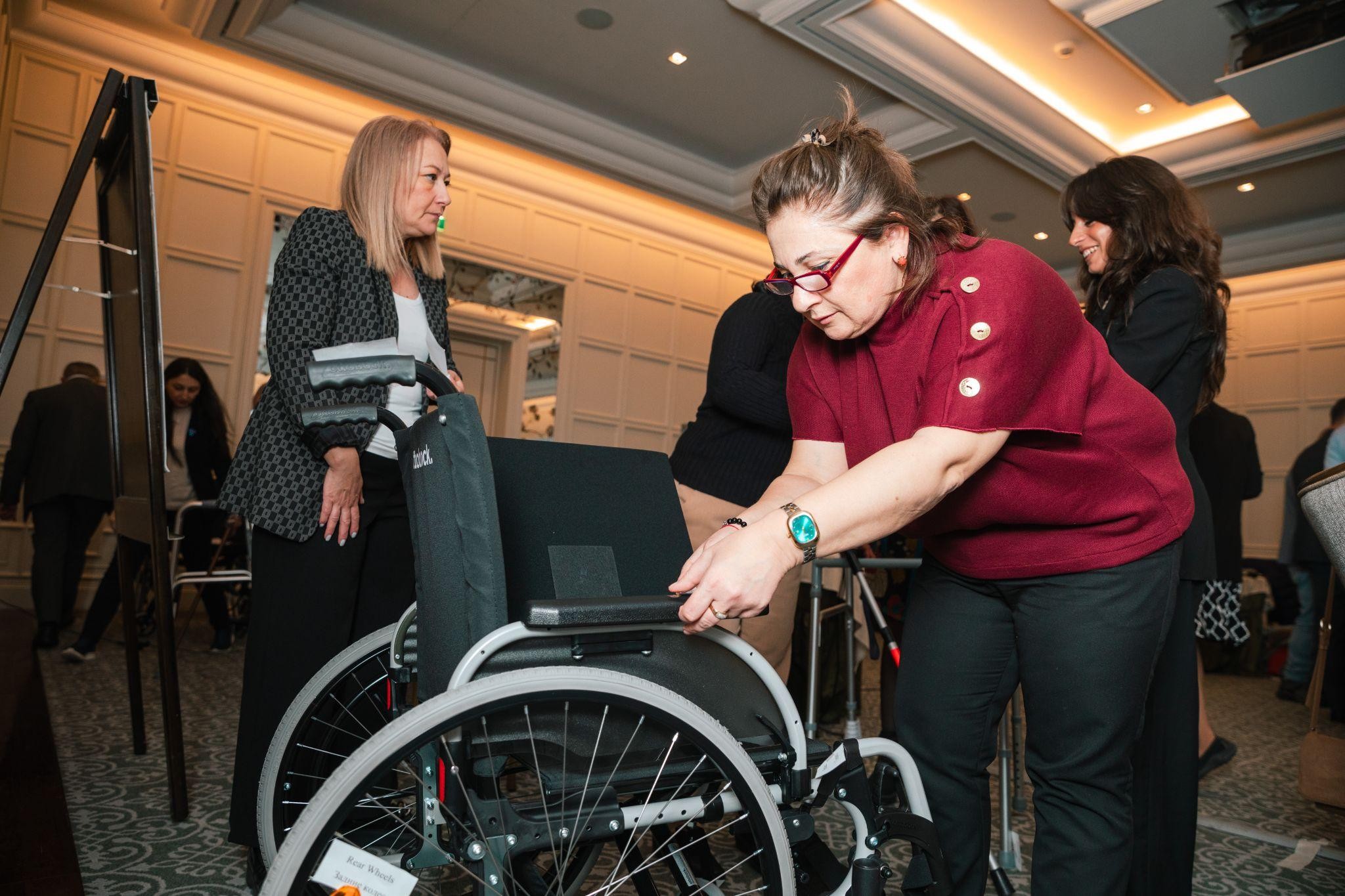
The November 2024 Baku Workshop on Assistive Product Specifications and Quality Standards gathered in the three countries—Azerbaijan, Georgia, and Tajikistan—to strengthen rigorous product evaluation capacity.
The impact then scaled to the entire continent with the March 2025 Pan-European Technical Briefing on Hearing Aid Specifications. This event was open to all 53 WHO/Europe Member States, proving that investment in the countries is driving elevated skills and standards across the full Region.
This rapid knowledge exchange has directly influenced professional practice. As Dr Matanat Afandiyeva, Director of the Scientific Research Institute of Medical Rehabilitation Medicine in Azerbaijan, reflected after a workshop: “Since the programme began, my approach to evaluating and selecting assistive devices has changed. I now pay much closer attention to international quality standards and the functional needs of users.”
Scaling-up proven service delivery models
The Intercountry Learning Program ensures that system-level advances achieved in one country are rapidly adapted and implemented in others. The effective one-stop shop model pioneered in Tajikistan—which integrates assessment, fitting, training, and follow-up within primary health care—is now being adapted for the context in Georgia and Azerbaijan. This leverages Tajikistan’s practical lessons to enhance access and streamline AT service delivery across the region.
As part of this regional approach, WHO Europe, supported by ATscale, has published the new Guide for Assistive Technology Market Assessment and Shaping as a key resource to all 53 Member States, recognizing that market shaping requires broad participation and structured analysis and planning. This guide offers comprehensive frameworks for improving assistive product markets through policy, collaboration, and market interventions at scale.
A self-sustaining cycle
ATscale investments are not just funding immediate solutions; they are fostering system-wide innovation and setting regional standards for sustainable practices. This regional approach demonstrates the potential of cross-country collaboration in affecting exponential positive change to create a self-sustaining cycle of peer exchange, applied learning, and regional policy leadership.