ATscale commits to increasing access to assistive technology at the Global Disability Summit 2025
The Global Disability Summit 2025, held in Berlin from 2-3 April 2025, brought together over 4,500 participants from governments, organizations of persons with disabilities and advocates, who collectively committed to advancing disability inclusion and access to assistive technology. Hosted by the governments of Germany and Jordan in collaboration with the International Disability Alliance (IDA), the summit welcomed diverse voices unified in purpose: to elevate the voices of persons with disabilities from across the world.
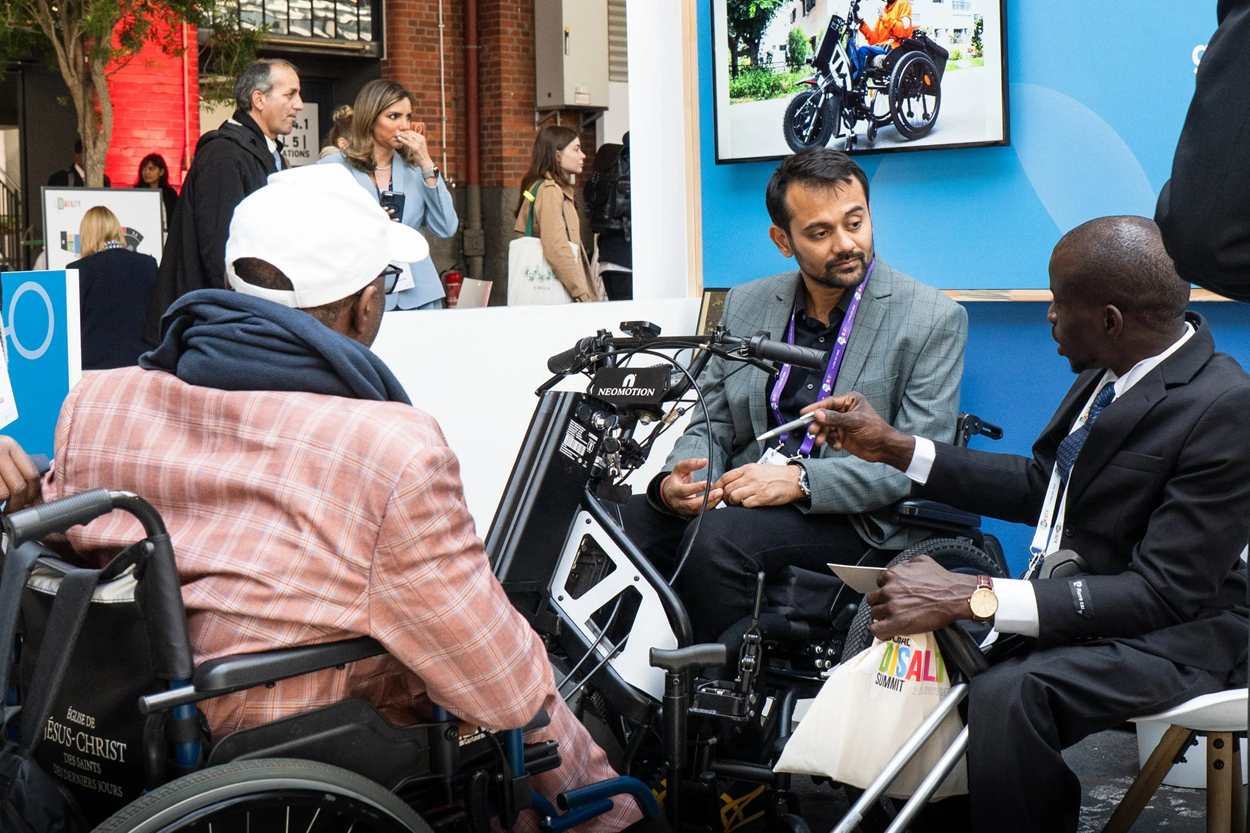
The ATscale-curated exhibition, Transforming Today and creATing Futures, proved to be a highlight of the summit. The exhibition highlighted the critical need for assistive technology, the challenges faced in accessing it, and the emerging solutions from across the world. Attendees witnessed first-hand the transformative power of assistive technology through demonstrations and interactive activities. The exhibition showcased recent innovations like 3D printing of assistive technology, speech-to-text and text-to-speech technology, low-cost glasses with vision kits, customizable wheelchairs with easily attachable front motors, and use of VR in training, among others, to educate, excite and challenge perceptions about assistive technology.
The German government, a co-host of the GDS, and ATscale’s co-organizer for the exhibition, is committed to promoting inclusive development and ensuring everyone has access to the assistive technology they need. "This exhibition is testament to our commitment to creating a society where everyone can participate and thrive," said Deputy Director-General Mr. Hans-Peter Baur, the Federal Ministry for Economic Cooperation and Development’s Commissioner for the Global Disability Summit 2025. "We are proud to showcase the incredible potential of assistive technology to transform lives and create a more inclusive world."
"Assistive technology is not just about devices; it's about providing opportunities for people to live their lives to the fullest," says Pascal Bijleveld, CEO of ATscale. “ATscale was born out of a GDS commitment in 2018, and so it seems timely and appropriate that ATscale returned seven years on to show progress made in the assistive technology sector and make a renewed commitment towards positive change.”
The exhibitors represented entrepreneurs, researchers, development organizations, private sector leaders and, most importantly, assistive technology users, working on sustainable solutions to address the huge gap in access to assistive products across all domain areas from the global south and north. Find the full list of exhibitors here.
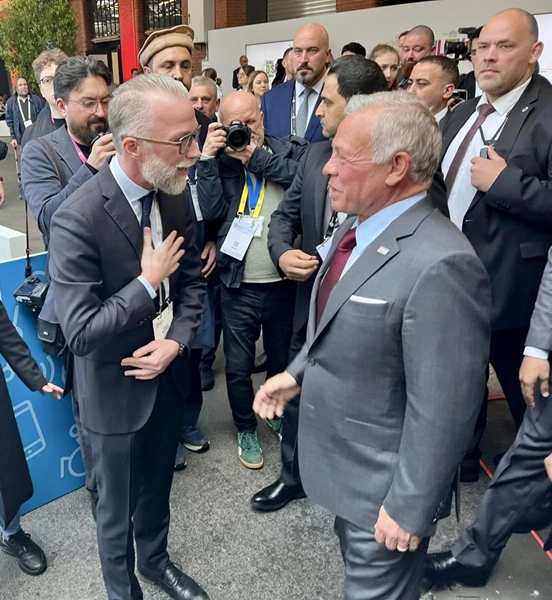
ATscale was honoured to host high-level dignitaries who took interest in the exhibition, including Olaf Scholz, Federal Chancellor of Germany, King Abdullah II of Jordan, German Federal Ministry for Economic Cooperation and Development (BMZ), Svenja Schulze, UK Minister for Social Security and Disability, Sir Stephen Timms, the Cambodian and Nigerian delegations, Dr. Nawaf Kabbara, President, International Disability Alliance, Assistant Secretary, Department of Foreign Affairs and Trade in Australia, Sally-Anne Henfry and many more.
Promoting changes through commitments
The GDS commitments mechanism is a structured process through which stakeholders make concrete pledges or commitments to implement the rights of persons with disabilities. As part of this process, ATscale committed to a framework for action. “By 2027, we aim to support at least 35 low- and middle-income countries, reaching 50 million individuals with essential assistive products and services. With a target to raise $195 million, ATscale is poised to integrate assistive technology into national systems, expand workforce capacity and foster innovation” said Pascal.
Recognizing the critical role of civil society, and in line with the Amman-Berlin Declaration, ATscale has pledged to allocate at least 5 per cent of its funding to organizations of persons with disabilities (OPDs). This ensures the voices of those most affected are central to the initiative. "Inclusion is not just a principle; it's a practice," emphasized Dr. Satish Mishra, ATscale's Head of Programmes. "Our work is guided by those we serve."
Calls to action
The summit also served as a platform for urgent advocacy. ATscale signed a call to action, urging key stakeholders to integrate assistive technology into humanitarian responses. “With over 48 million children and adults with disabilities affected by humanitarian crises, the need for accessible technology is critical. "Access to assistive technology is vital in emergencies," Dr. Satish. "It provides essential support and enhances inclusivity."
ATscale also added its voice to Save the Children's call to action to governments, donors and organizations to invest in inclusive education, ensure universal health care and access to AT for all, strengthen systems for child protection and family support to prevent violence and neglect, and enable the participation and leadership of children with disabilities in shaping their own futures.
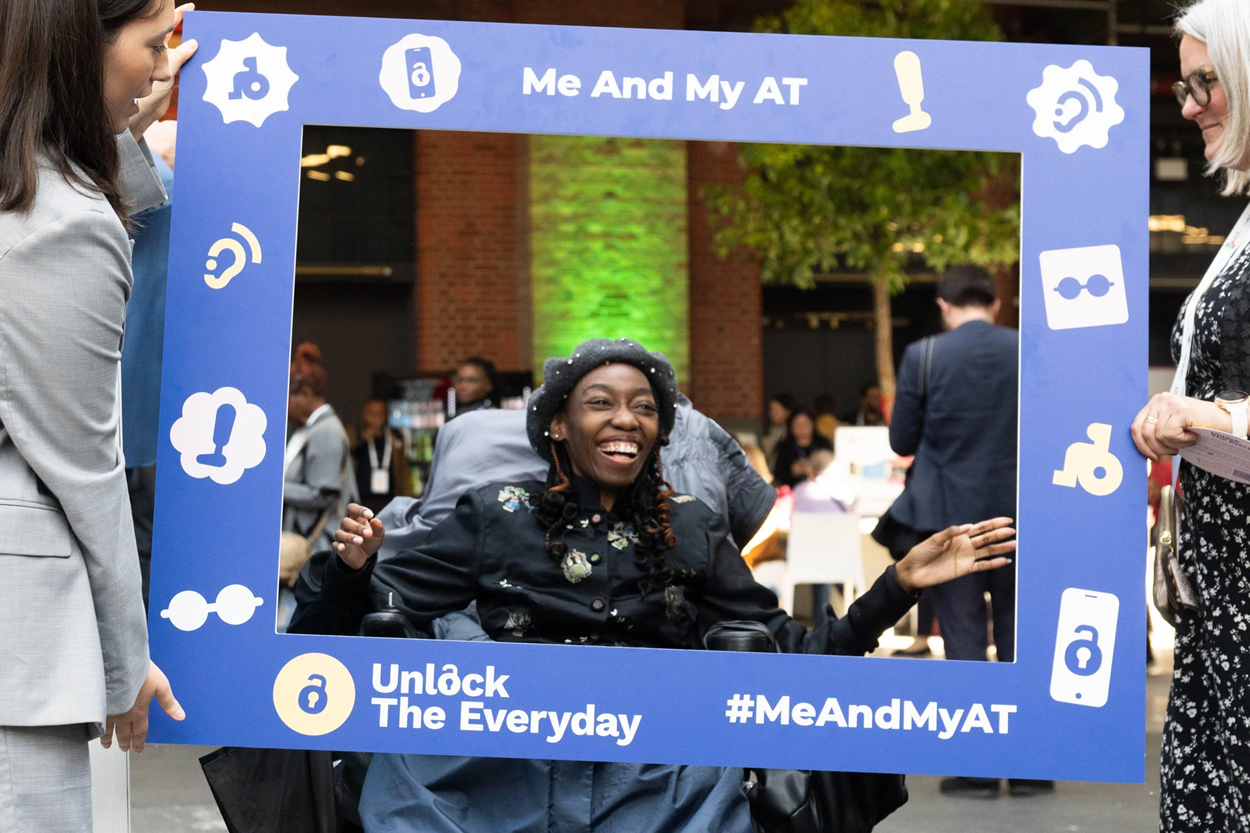
The Me and My AT challenge, part of the #UnlockTheEveryday campaign, was another significant initiative launched at the summit. This campaign encourages assistive technology users to offer personal stories, highlighting how assistive products enable them to live fully. The engagement was exciting to see, with users of assistive technology from around the world taking photos, recording videos and explaining how their assistive products help them live their lives to the fullest. Momentum is building towards the next World Day for Assistive Technology, which will take place on 4 June.
Looking ahead
As the summit concluded, high-level guests, including King Abdullah II of Jordan and German Chancellor Olaf Scholz, expressed their support for the commitments made.
ATscale's commitments align with the Amman-Berlin Declaration, which advocates for at least 15% of international development programmes to invest in disability inclusion. "This is a pivotal moment," Pascal reflected. "By working together, we can create a future where everyone has the opportunity to thrive."
The Global Disability Summit 2025 was more than an event; it was a call to action, a celebration of progress and a catalyst for change. As the world moves forward, ATscale's work will undoubtedly continue to transform lives, unlocking the potential of assistive technology for millions – especially in low- and middle-income countries.
Full list of ATscale commitments
ATscale commits to prioritizing equitable access to assistive technology as a critical enabler of inclusion, empowering persons with disabilities and others who benefit from assistive technology to participate fully in education, employment and society.
✅Supporting at least 35 low- and middle-income countries in directly reaching 50 million individuals – a majority of them persons with disabilities – with life-changing assistive products and services by 2027.
✅Raising US$195 million by 2027 to support country-level assistive technology integration, expand workforce capacity and promote innovation in assistive technology provision.
✅Focusing on reducing barriers like taxes and tariffs to enhance access to affordable, high-quality assistive products for those who need them most.
✅Prioritizing inclusion by allocating at least 5 per cent of funding to civil society organizations, including OPDs, ensuring their voices are at the heart of our work.
✅ Advocating for increased national and international investment to close the significant assistive technology access gap, ensuring no one is left behind.
✅Supporting the integration of assistive technology into humanitarian responses, helping pre-position essential products and strengthen preparedness plans in crisis-affected regions, providing vital support when it is needed most.
The commitment builds on ATscale's 2024–2027 Strategy, which outlines an ambitious plan to scale up access to assistive technology globally and foster sustainable systems for long-term impact.