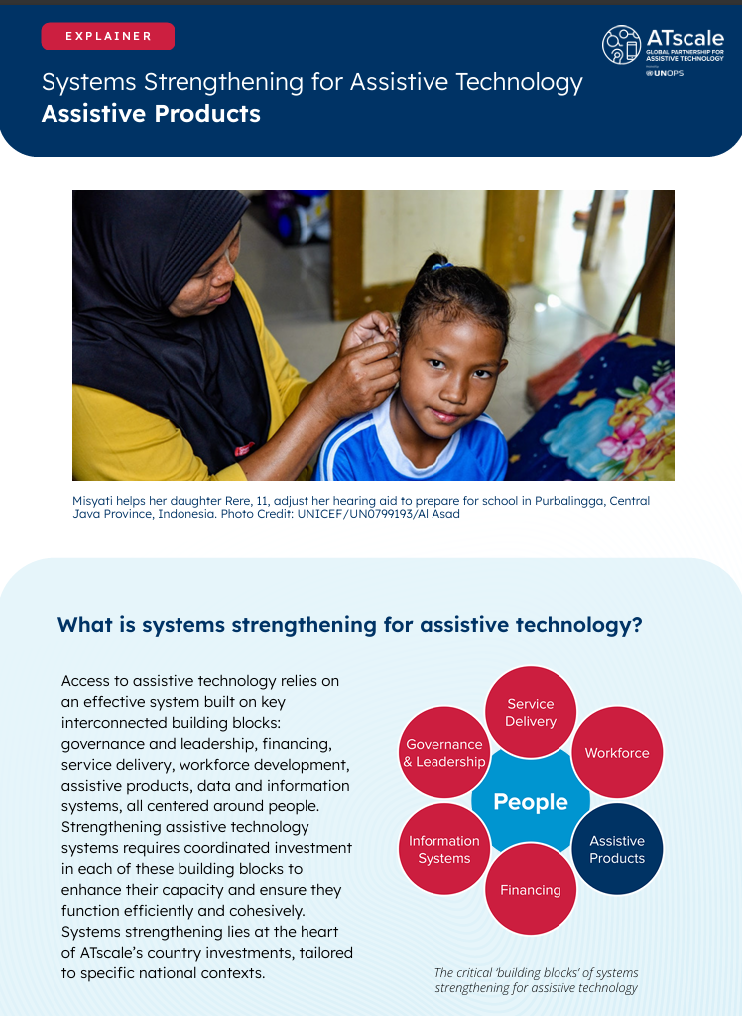
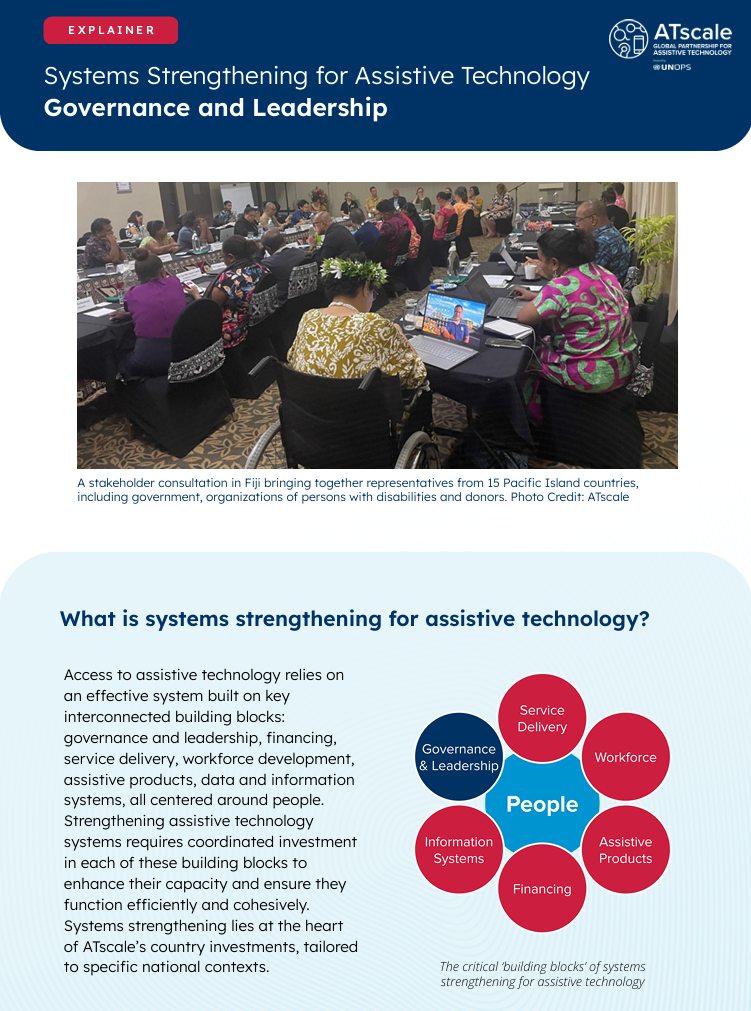
Systems strengthening for assistive technology: governance and leadership
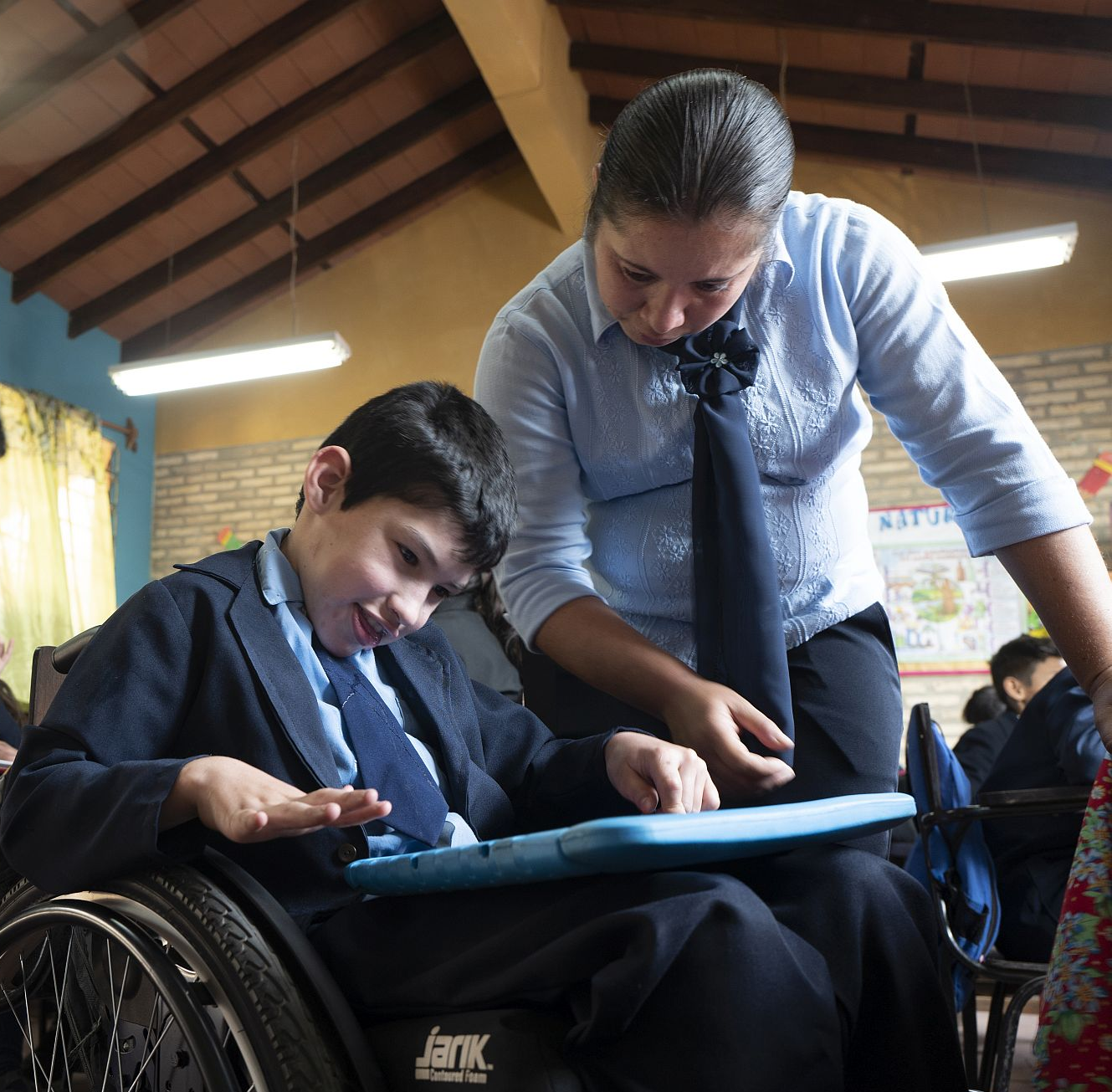
Worldwide, more than 2.5 billion people need one or more assistive products, such as wheelchairs, hearing aids, prostheses, spectacles or digital assistive technology. This number is expected to rise to 3.5 billion in 2050.
The presence of legislation surrounding the right to access assistive technology is only one step towards provision. Whilst many countries have legislation specifically for assistive technology or that explicitly mentions provision, budget lines and implementation of services are more challenging to implement. In addition, legislation is likely to cover different functional domains differently, creating disparity in service provision and funding. Lack of awareness also affects the prioritization of assistive technology by governments, limiting its integration into national social service strategies and policies and Universal Health Coverage.
As assistive technology is a cross-cutting topic, responsibility can be shared or contested, leading to fragmented efforts and a lack of leadership. Whilst the Ministries of Health and Social Services are often the responsible ministries, the other ministries such as finance, education, labour, trade and commerce, defence and telecommunications may also have different programmes serving different population groups, meaning access is not always equitable.