UNICEF and ATscale launch Nepali text-to-speech digital voice Dina “दिना” to enhance accessibility for the visually impaired
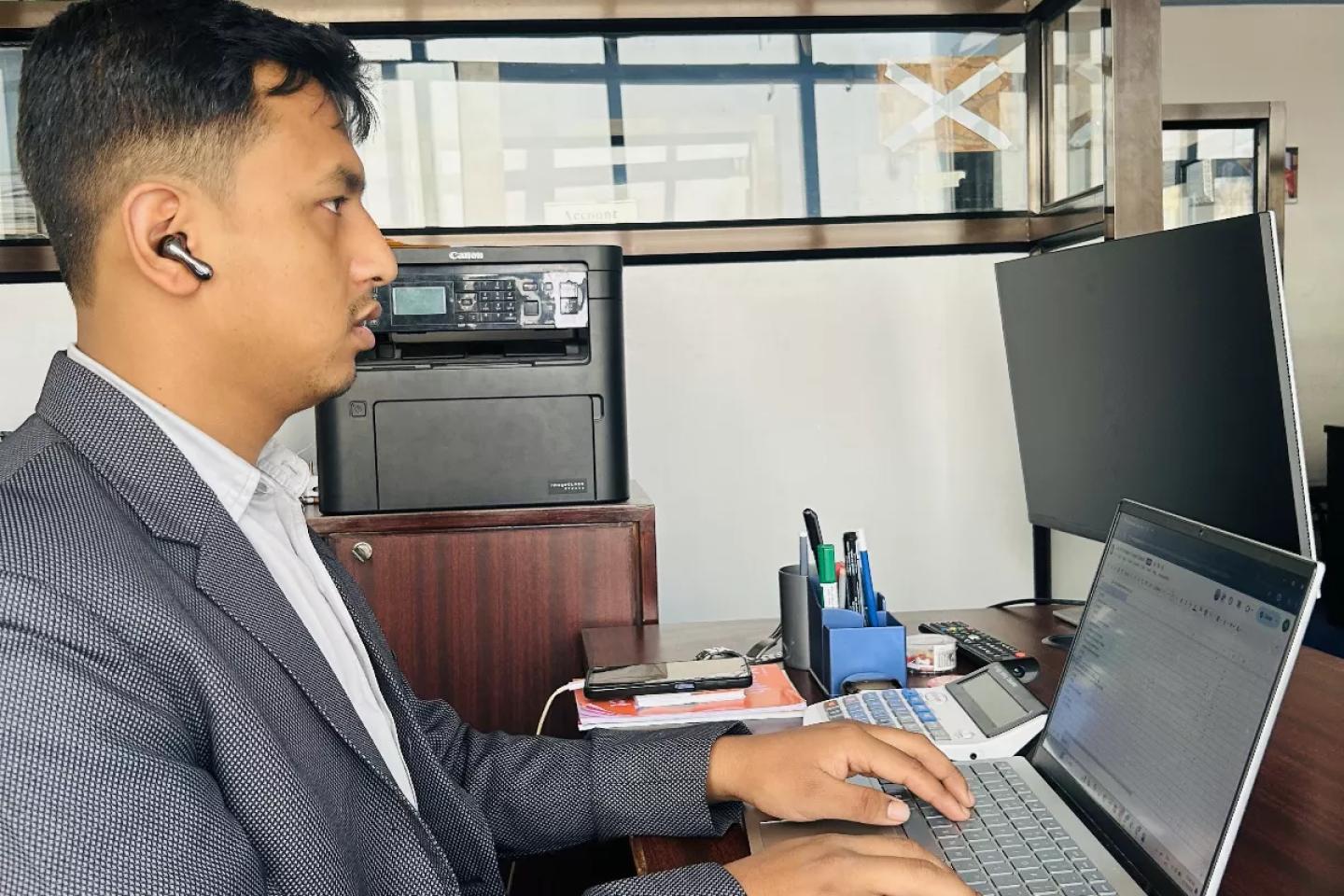
Kathmandu, Nepal, 3 December 2024: In an effort to enhance digital accessibility for individuals with visual impairment in Nepal, UNICEF and ATscale have jointly launched a Nepali text-to-speech (TTS) voice software named “दिना”. This innovative software is now available for free download and installation, transforming the accessibility landscape by providing realistic Nepali voices for digital content.
TTS technology significantly enhances accessibility and independence for individuals with visual impairments by enabling them to access written materials in audio format. However, until now TTS effectiveness has been constrained by limited language support, predominantly in English, leading to incorrect pronunciations in less commonly supported languages such as Nepali.
To bridge this gap, UNICEF and ATscale developed Dina “दिना”, compatible with Windows and Android operating systems and integratable as an add-on for TalkBack as well as NVDA and other SAPI-5-compatible screen readers. As open-source software, Dina can be further modified and improved to be installable on additional platforms, ensuring broader access to digital content for children and adults in Nepal.
“Access to information and communication is a basic human right,” said Pascal Bijleveld, CEO at ATscale “With Dina, ‘दिना,’ we are helping to fulfil this right for persons with visual impairment in Nepal by giving them a voice and a pathway to access life-changing resources. This technology has the power to greatly enhance independence and transform lives.”
Before the launch, UNICEF and ATscale collaborated with youths with visual impairments to develop and pretest the software and ensure its quality. Approximately 15 young volunteers provided valuable feedback to improve the software's accessibility and user experience. Their contributions were vital in refining the voice quality to meet the needs of users.
“Around two years ago, I participated in a survey and emphasized the necessity of developing a Nepali TTS voice that adopts a natural tone. I'm delighted to see that this has finally come to fruition,” said Nir Shrestha, a disability rights youth advocate and one of the volunteers. “I also facilitated its development phases by testing the beta version and arranging for real users to test it. I believe this TTS will greatly benefit all Nepali users.”
This project thus not only aims to improve the software for Nepali users but also engage and empower young volunteers by involving them in meaningful technological development and contribution to their community.
"This initiative is a major step towards making digital content accessible to everyone. It opens up new possibilities, especially for visually-impaired children and young people in Nepal,” said Alice Akunga, UNICEF Representative to Nepal. “I am deeply thankful to the young volunteers who tested this software and helped to improve it. Their involvement shows that community-based engagement is crucial for developing solutions that are effective, inclusive and sustainable. I urge all the relevant stakeholders to promote and make all individuals who can benefit from the software aware so that they have access and reach to use it effectively.”