Billions lack access to assistive products amid six-fold cost increases and two thirds paying out of pocket, new report reveals
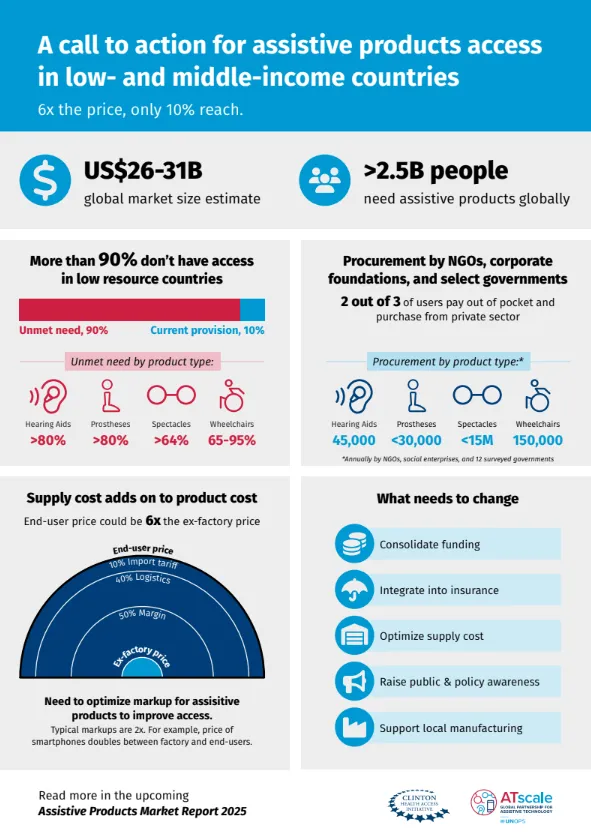
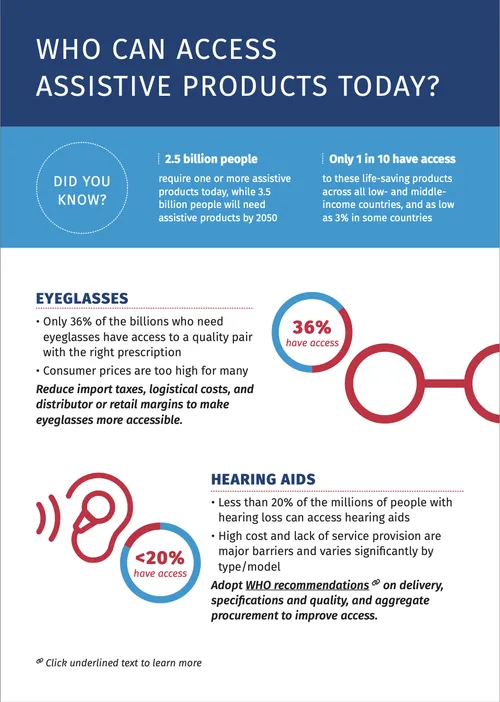
GENEVA, SWITZERLAND – 30 June 2025 – A groundbreaking, new Assistive Products Market Report 2025, launched today by ATscale and the Clinton Health Access Initiative (CHAI), projects the global assistive technology market will reach an estimated US$26 to US$31 billion, doubling its value in just nine years. However, the report starkly reveals that over 1 billion people worldwide still lack access to the assistive products they critically need, with a majority residing in low- and middle-income countries (LMICs). This unmet need is estimated to be ten times larger than the current demand in these regions, highlighting an acute market failure.
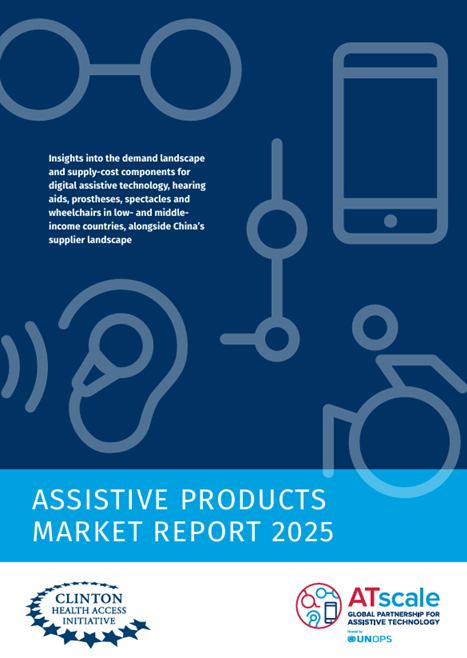
The Assistive Products Market Report 2025 provides an in-depth analysis of the demand landscape, supply-chain costs and emerging innovations within the assistive products sector. It details the significant market gaps, particularly in LMICs, where 65 per cent to 95 per cent of those needing products, such as wheelchairs, eyeglasses, hearing aids and prostheses, remain without access. The report identifies fragmented procurement, funding shortfalls, market and supply chain barriers, and policy gaps, as key impediments to equitable access.
"This report moves beyond describing the current landscape to offering practical solutions for addressing unmet needs," stated Pascal Bijleveld, CEO of ATscale. "It underscores the urgent need for a coordinated global effort to dismantle market barriers and ensure assistive technology reaches everyone who can benefit from it."
“I have seen how assistive technology in other countries significantly improves the lives of those in need, and I believe all these things are possible in Liberia as well, to support the disabled community in realizing their independent living.” added Liberia Minister of Health, Dr. Louise M. Kpoto.
The report analyses how the need for assistive products is growing, largely because of increasing population needs in LMICs due to ageing populations, the rising burden of non-communicable diseases and greater awareness of assistive technology solutions. However, two out of three users globally still pay out of their own pocket, with end-user prices reaching up to six times the ex-factory price. Significant challenges persist in accessing these essential products. For instance, import duties on eyeglasses can be as high as 108 per cent in some LMICs, and shipping costs can account for 15–40 per cent of product expenses – costs commonly passed on to users. Waiving import tariffs can therefore significantly improve affordability. Recently, Zimbabwe eliminated import taxes on a list of assistive products, including spectacles, hearing aids, and several digital assistive devices.
The report champions innovative solutions, such as ready-to-assemble prescription glasses and locally manufactured bamboo-frame wheelchairs, alongside strategic recommendations for governments, donors and buyers to optimize supply chains and reduce costs.
Looking ahead, the report emphasizes the importance of enhanced transparency in supply chains, strengthened government policies and consolidated funding sources to promote efficiency and scale the assistive technology market in LMICs. "By generating actionable market insights, we can create evidence-based solutions that expand access to assistive technologies – advancing our mission to unlock the potential of life-changing products for all who need them" added Frederic Seghers, Senior Director for Assistive Technologies at CHAI.
About ATscale, the Global Partnership for Assistive Technology
Some 2.5 billion people around the world need a form of assistive technology and this figure is expected to grow to 3.5 billion by 2030. ATscale, the Global Partnership for Assistive Technology, is a cross-sector partnership with a mission to transform people’s lives through assistive technology. It catalyses action to ensure that, by 2030, an additional 500 million people in low- and middle-income countries get the life-changing assistive technology they need, including eyeglasses, hearing aids, prostheses, wheelchairs and a range of digital technologies.
About CHAI
The Clinton Health Access Initiative, Inc. (CHAI) is a global health organization committed to saving lives and reducing the burden of disease in low- and middle-income countries. It works with partners to strengthen the capabilities of governments and the private sector to create and sustain high-quality health systems that can succeed without its assistance. https://www.clintonhealthaccess.org/
Media Contact:
Corina Milic, Director of Communications, CHAI
+1 (416) 371-6313
press@clintonhealthaccess.org