How assistive technology is rebuilding livelihoods in rural Cambodia
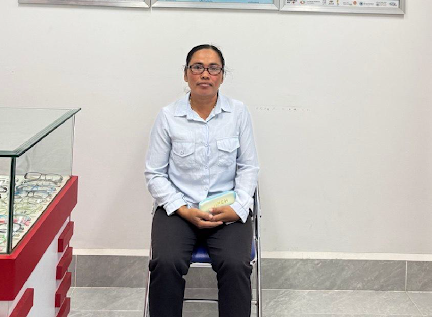
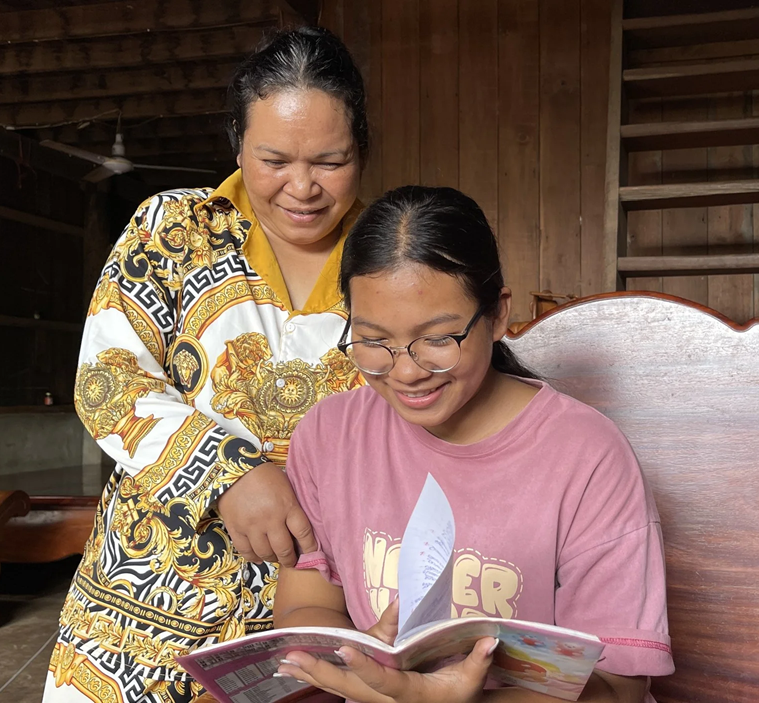
When Ms. Sum Sophon, a tailor living in Veal Smao village, could no longer thread her needles, her daily life shrank, her business stalled, and with it, her hope to be able to pay for her children's higher education began to slip away.
As the primary breadwinner, her entire household relied on her ability to sew, wash clothes, and handle daily farm work. When severe blurry vision and chronic watery eyes set in, her trusty needle represented an impossible barrier, and her deteriorating vision stopped her in her tracks.
Her situation is not usual. It is part of a massive global problem, highlighted in the WHO & UNICEF Global Report on Assistive Technology, which shows that more than 2.5 billion people worldwide need one or more assistive products. But where you live matters: while 90% of people in high-income countries can access the assistive technology that they need, that number drops to just 10% in low- and middle-income countries. A huge chunk of this gap comes down to basic eye care. According to WHO global health data on vision impairment, at least 2.2 billion people live with poor sight simply because they don't have basic glasses to fix common issues like nearsightedness, farsightedness, or ageing.
Closing this gap requires shifting away from short-term charity toward permanent, government-led public healthcare. Supported by ATscale, a consortium led by the Clinton Health Access Initiative (CHAI), alongside Humanity & Inclusion (HI) and the Cambodia Disabled People's Organisation (CDPO), have expanded operations across the country. In collaboration with the Ministry of Health and the Ministry of Social Affairs, Veterans and Youth Rehabilitation, they are changing how the country handles long-term care.
Restoring vision and keeping local businesses alive
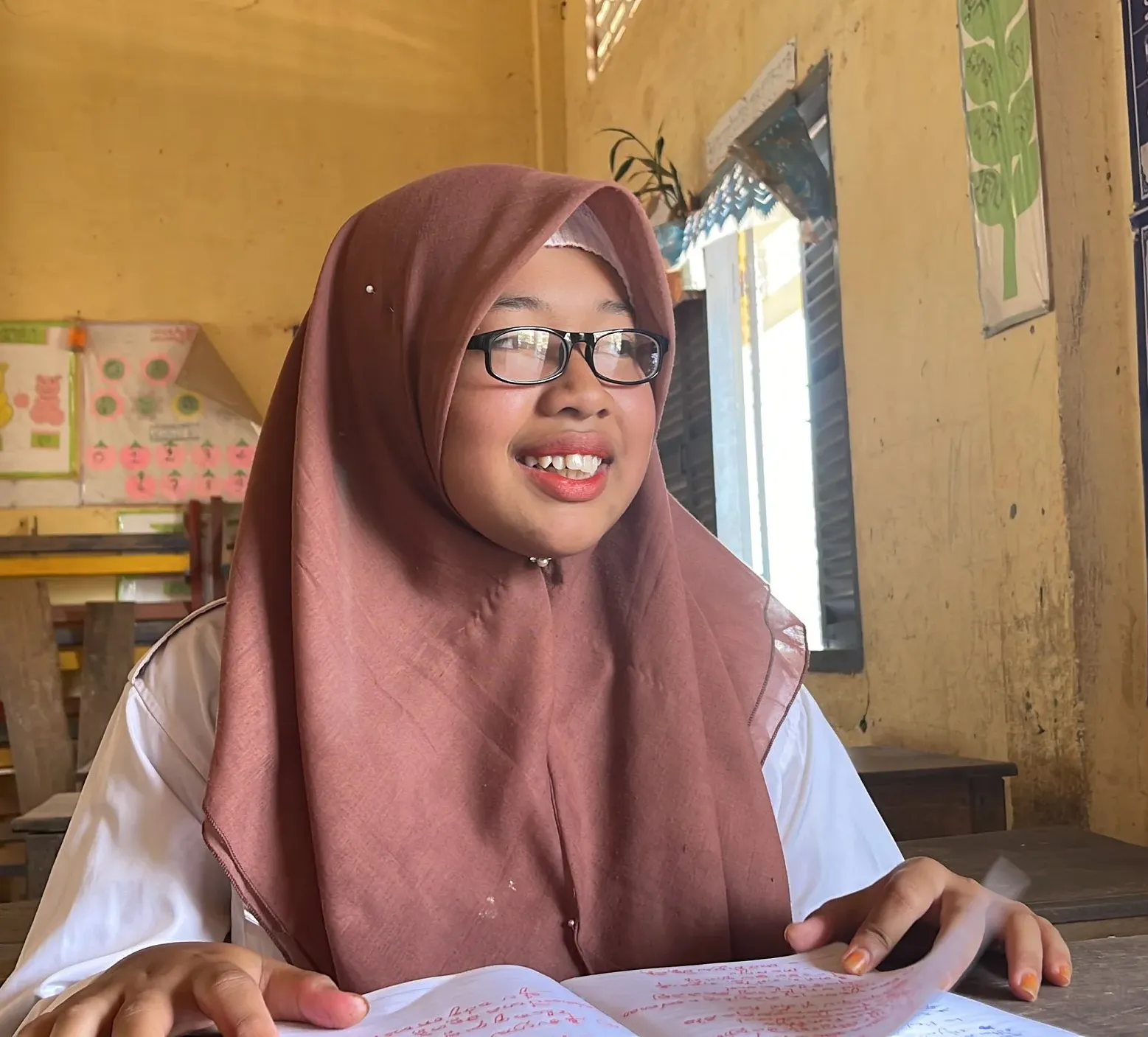
Sophon’s turnaround began when she visited the Romeas Hek referral hospital, where she received a full eye exam and a pair of prescription glasses, completely free of charge. "I feel very happy after using these glasses because I can see very clearly. Without them, I would not be able to carry out my daily activities or sustain my tailoring business," explained Sophon, reflecting on how quickly her life has changed.
The hospital is home to one of the seven newly upgraded public vision centres, made possible by the programme through the government’s national social security fund and health equity fund framework.
Her story is part of a much larger national expansion supported by ATscale and other partners. Over the course of 2025, the public vision network grew to 21 active centres. Backed by 53,000 eyeglasses purchased through the Vision Catalyst Fund, clinical teams screened 9,865 clients and gave out corrective spectacles to 5,155 people. In Kampot province, the programme even started testing a model that combines eye exams with routine checkups for chronic illnesses like diabetes and hypertension, catching multiple health issues at once before they worsen and reducing costs.
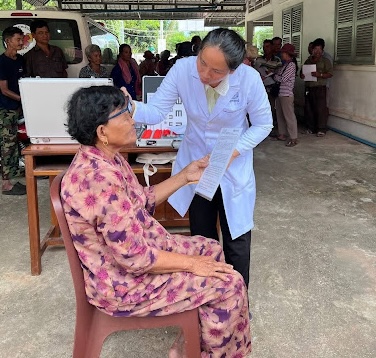
This shift has also fundamentally changed the day-to-day work for local medical staff. As Ms Chham Sreyno, one public hospital refractionist trained through the programme in Cambodia, explained, "The six-month refraction training course has completely transformed our capacity to manage complex refractive cases locally. We are no longer waiting for external screening missions; our hospital is now equipped to serve our rural communities daily.”
A second chance at mobility after a stroke
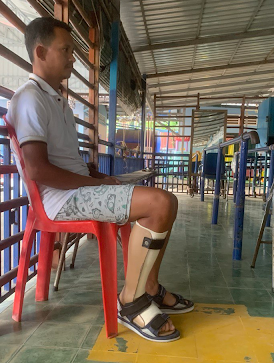
Further inland, physical rehabilitation centres are focusing on mobility. In Kor village, located in the Prey Chhor district of Kampong Cham, 34-year-old Thuy Veasna’s life changed instantly when a stroke ended his career as a microfinance credit officer. The father of two was left with severe weakness in his right arm and leg, making it incredibly difficult to speak, walk, dress, or bathe.
After spending their life savings on a ten-month hospital stay in Phnom Penh, Veasna’s family had to bring him home without any plan for follow-up care. The emotional weight was heavy; neighbours told him his working life was over, and his 10-year-old daughter was teased at school because of his disability. Even the local health staff did not know where to send him for help.
The breakthrough happened in January 2026, when a trained village chief told Veasna about a mobile rehabilitation workshop visiting his local commune hall, just an hour from his home, and he went along with his daughter. They stayed for a week while Veasna underwent intensive physiotherapy and a custom orthotic fitting, and Veasna got his life back.
"After just one week of treatment, my mobility has improved daily with the help of my assistive device," Veasna said. "I now feel safe and comfortable walking and performing self-care tasks. I feel hopeful about resuming my career in the near future."
Veasna is one of many people finding their footing again. Since the programme began, nearly 2 million people across Cambodia have received assistive products and the associated services. Over the past twelve months alone, 11 physical rehabilitation centres have provided specialized clinical care to nearly 30 thousand people. To help them regain their independence, the programme has provided 6,465 prosthetic and orthotic devices, 1,511 wheelchairs, and 4,550 walking aids to vulnerable groups, including children in remote areas. To reach people who cannot travel to provincial capitals, mobile clinics visited 76 rural districts, helping 5,276 people with on-the-spot repairs and equipment. To keep this system running, the project has also trained about 2,000 professionals nationwide.
From charity quick-fixes to lasting policy change
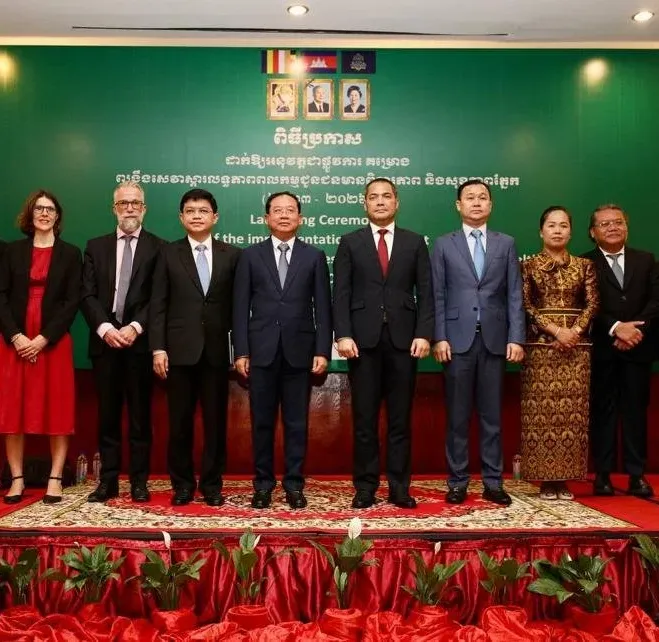
These results show that investing in basic human mobility and vision pays off. Economic research by ATscale, demonstrates that every single dollar spent on assistive technology generates a nine-dollar economic return ($9:1) by helping people return to work and reducing the time families spend on full-time caregiving. To protect these advancements for the future, Cambodia hit a major policy milestone in 2025 when the ministry officially signed the national priority assistive product list of Cambodia and the PRC outreach service guideline into law. This standardizes equipment procurement and care across all provinces.
Commenting on this policy shift, ATscale CEO Pascal Bijleveld said, "Cambodia’s official endorsement of its National APL exemplifies how strategic country engagement can transform fragmented, donor-dependent charity lines into institutionalized, state-governed public health systems."
A major part of this institutional framework is a new unified database for rehabilitation centres, which replaces old, fragmented NGO-tracking systems and connects directly with national social safety nets such as IDPoor. H.E Yeap Malyno, Director General for Social Policy, Ministry of Social Affairs, Veterans and Youth Rehabilitation (MoSVY), explained the long-term value of this shift: "The integration of our new unified database into Cambodia’s central social protection infrastructure signals our commitment to sustainable, domestic funding for rehabilitation as a cornerstone of Universal Health Coverage."
There are still hurdles to clear, mostly when it comes to funding. Cambodia’s law on disability guarantees free rehabilitation, but the state budget is currently capped at 3,556,440,000 Riels—about $885,694 USD annually. On top of that, public insurance does not yet automatically cover everyday items like eyeglasses or hearing aids. Moving forward, technical teams are working with the national social protection council to build a permanent rehabilitation benefits package directly into the health equity fund (HEF) and national social security fund (NSSF).
By including assistive technology in healthcare budgets and hospital pathways, Cambodia is creating a practical blueprint for low- and middle-income countries around the world. Crucially, the strategy keeps the community actively involved in its own evolution. As Ms Mak Monika, Executive Director of Cambodia Disabled People’s Organization (CDPO) emphasized, "By actively involving organizations of persons with disabilities in sub-national policy dialogue, the project ensures that accountability, dignity, and accessibility standards are defined directly by the users who rely on these lifelines."